The temple where light dwells
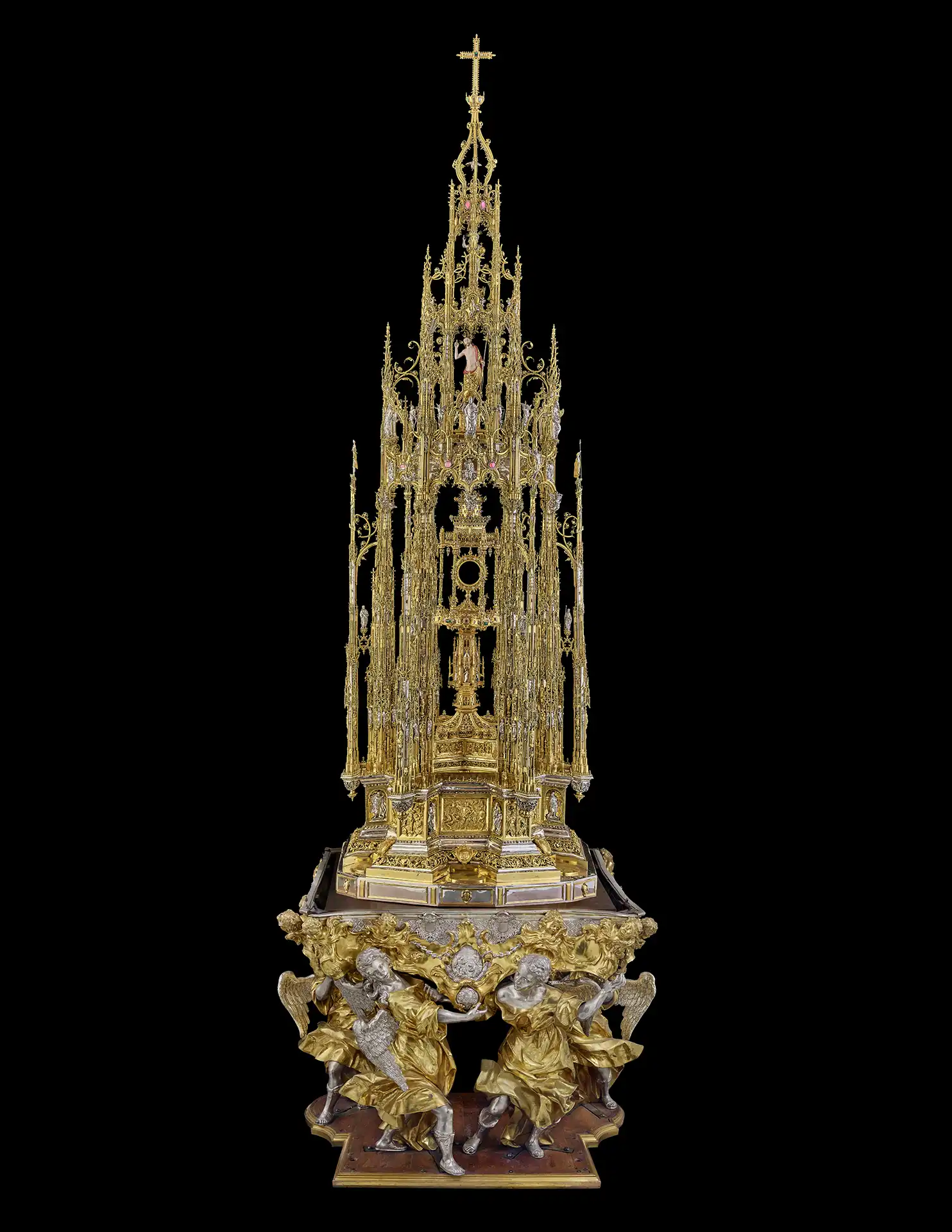
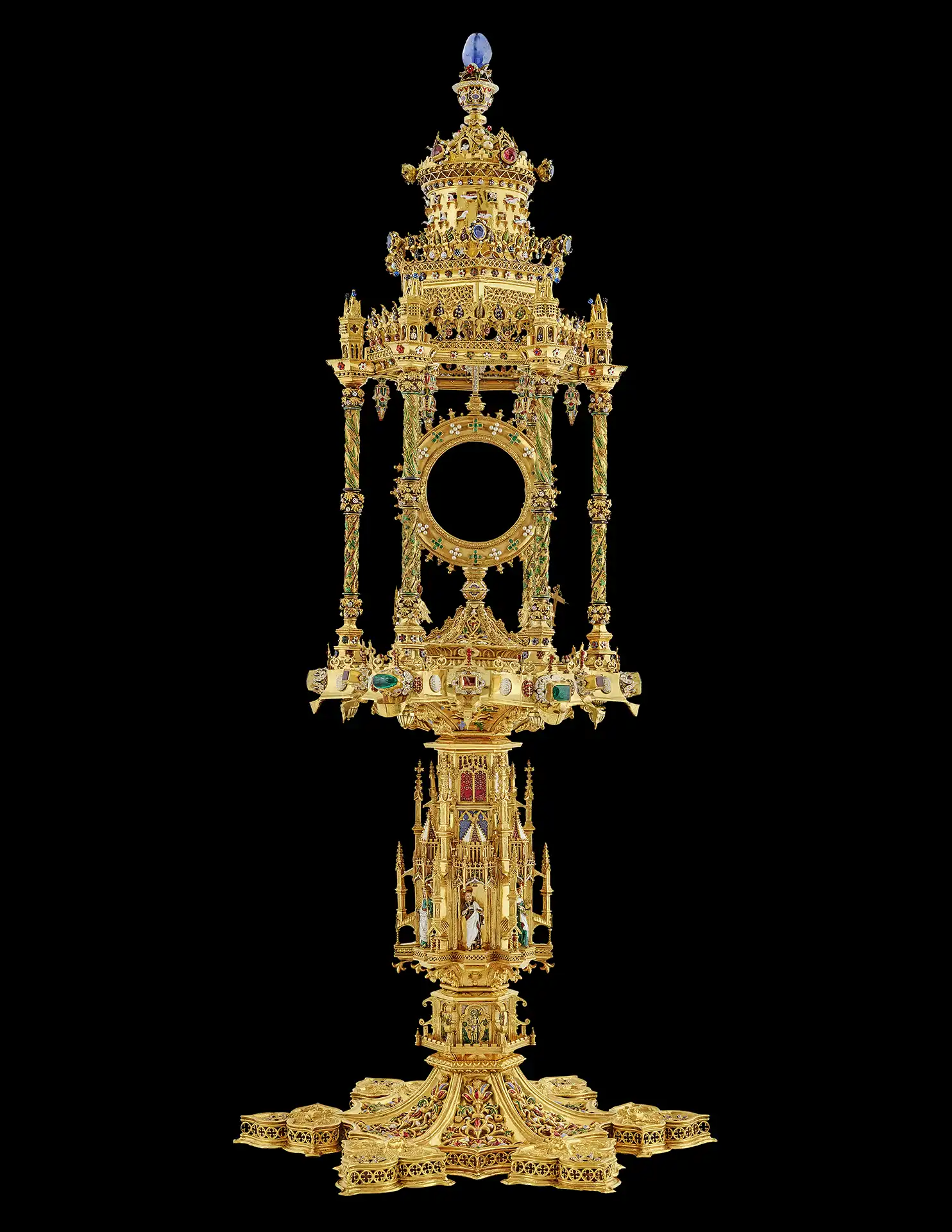
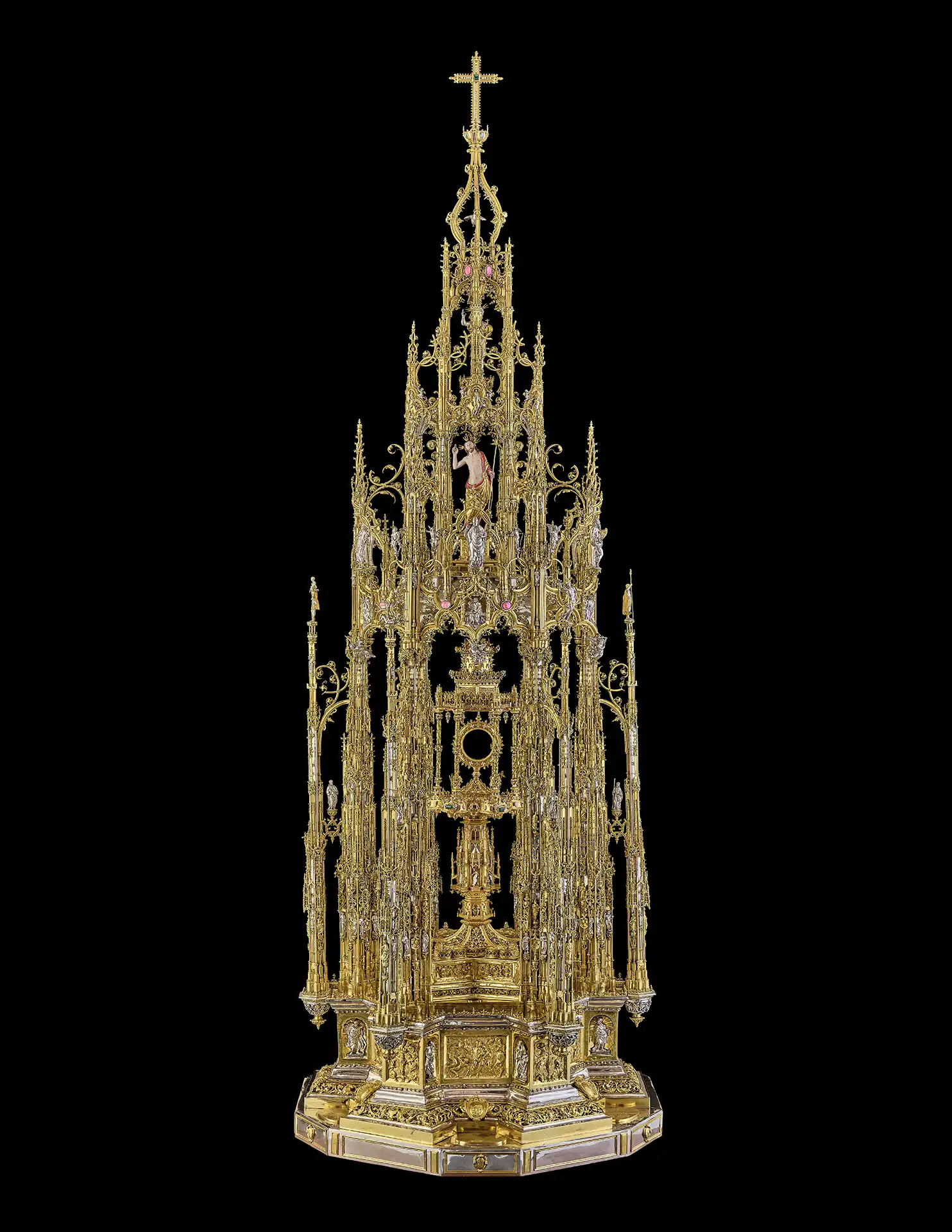
In the half-light of the Treasury, a gilded silver structure rises like a cathedral suspended between heaven and earth. It is the Custodia of Enrique de Arfe, emblem of the Primatial Cathedral and the luminous heart of Toledo’s Corpus Christi. Its story begins in 1515, when Cardinal Francisco Jiménez de Cisneros commissioned the goldsmith Enrique de Arfe— a master of German origin settled in Castile— to create a great Eucharistic shrine worthy of honoring the real presence of Christ in the Eucharist.
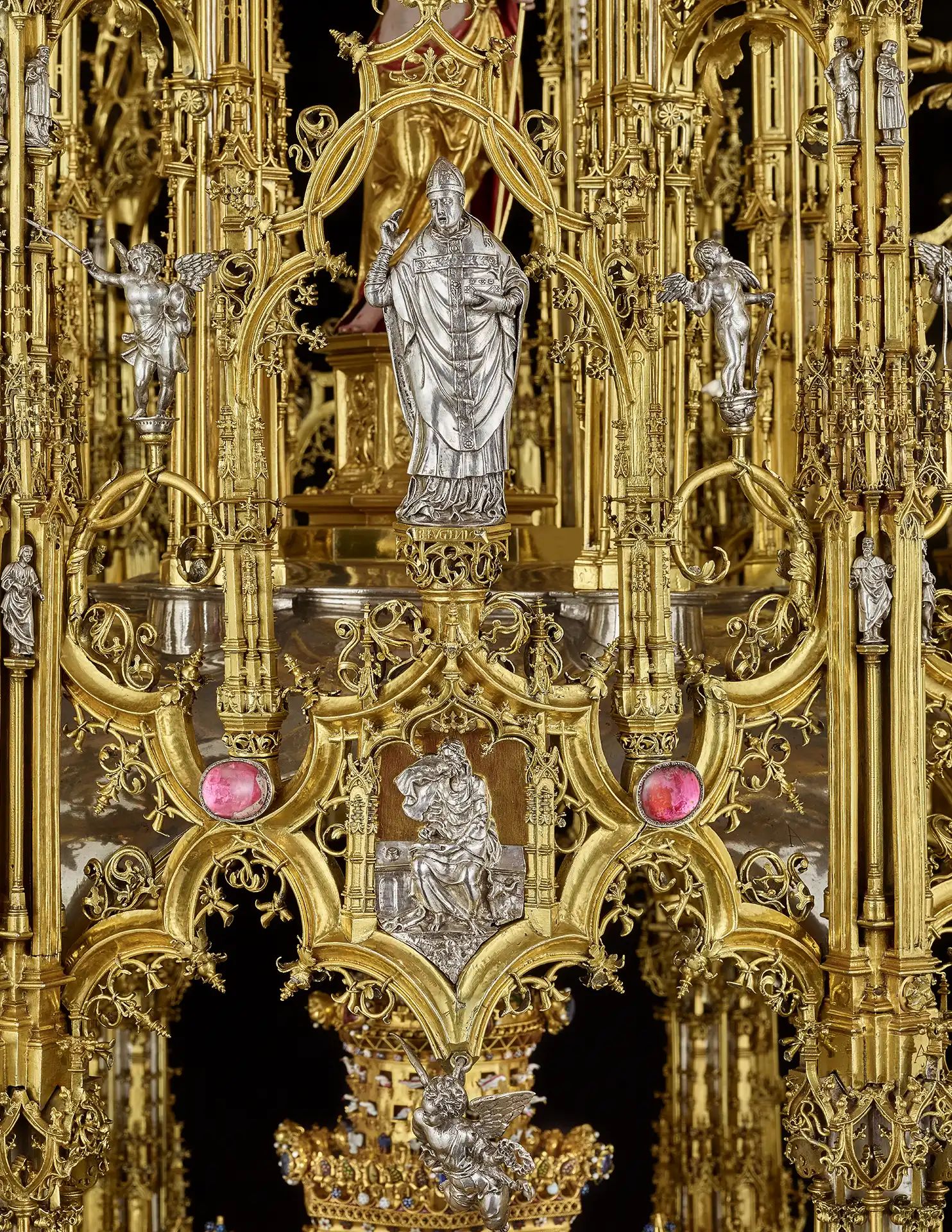
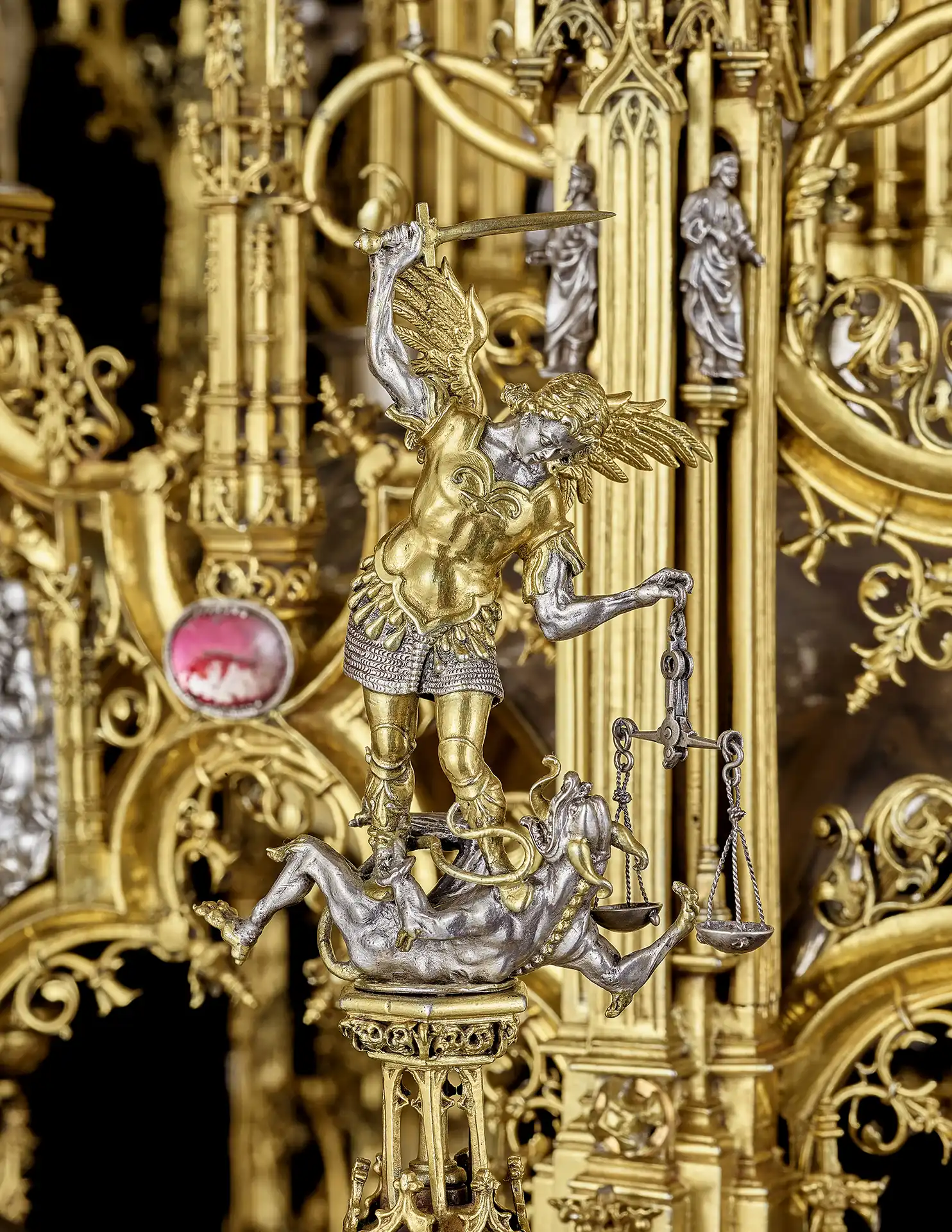
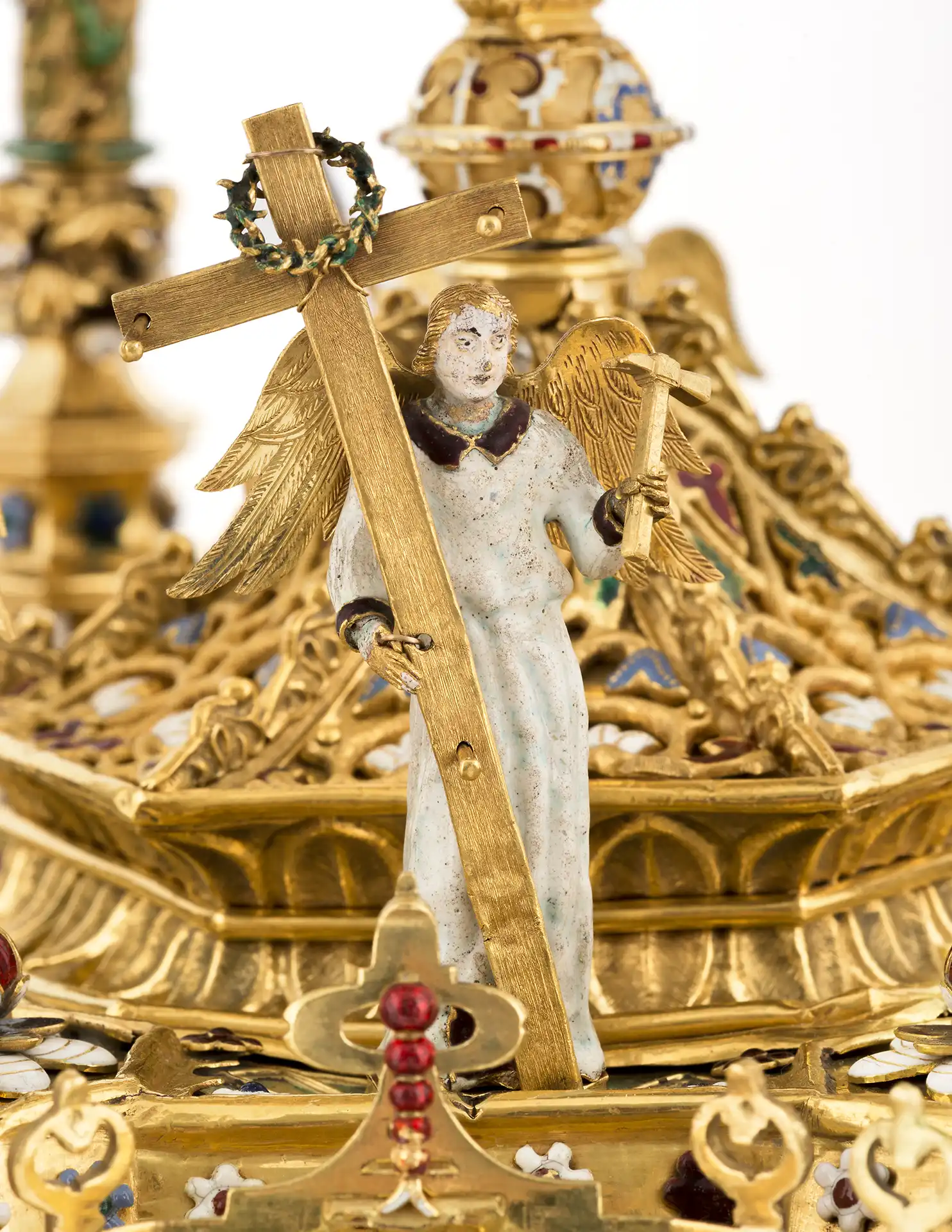
For nearly a decade, Arfe shaped a miniature Gothic temple standing 3.09 meters high, composed of more than 5,000 assembled pieces, 260 figures, and almost 200 kilograms of gilded silver, enriched with gold, enamels, and precious stones. Its structure rises in three ascending tiers symbolizing the earthly Church, the heavenly realm, and the glory of God.
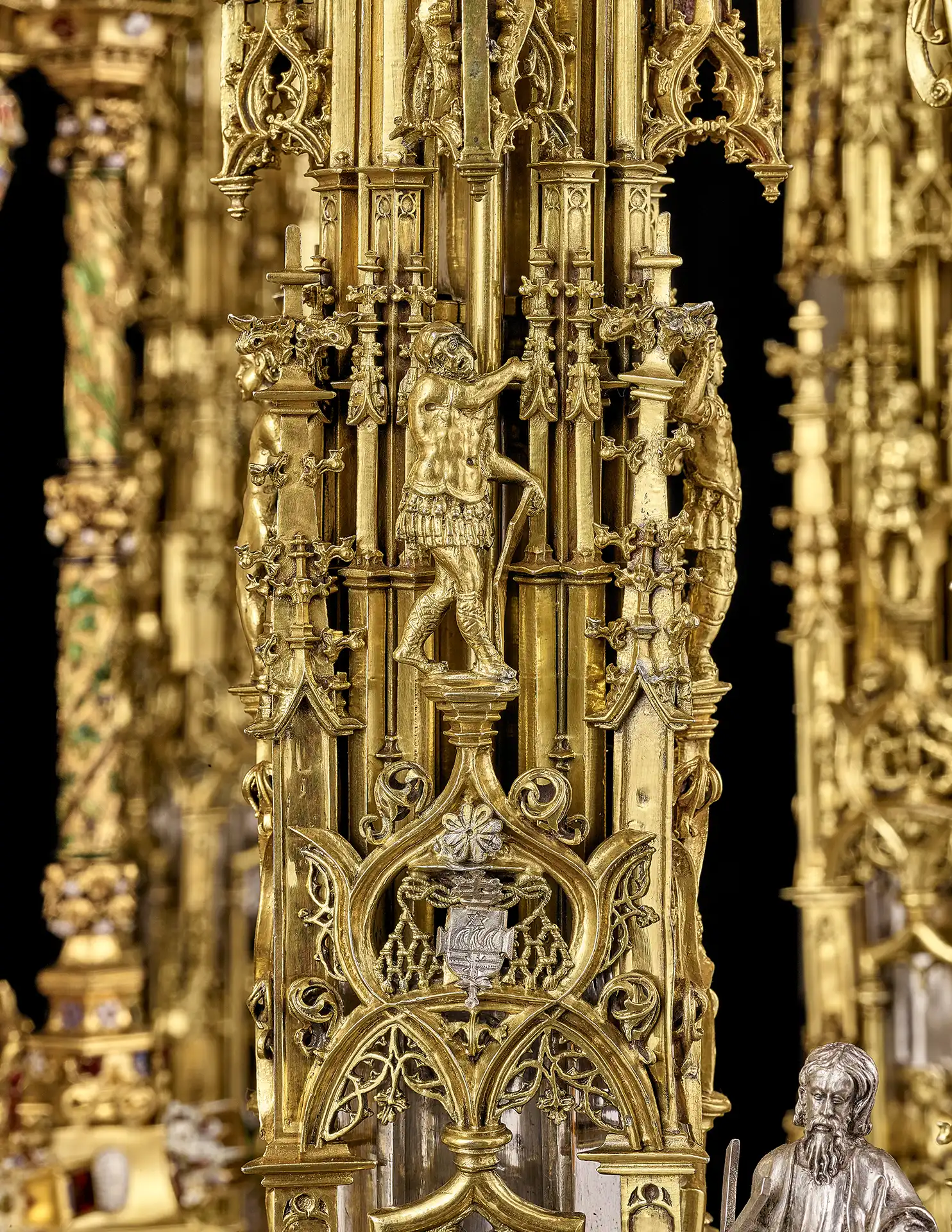
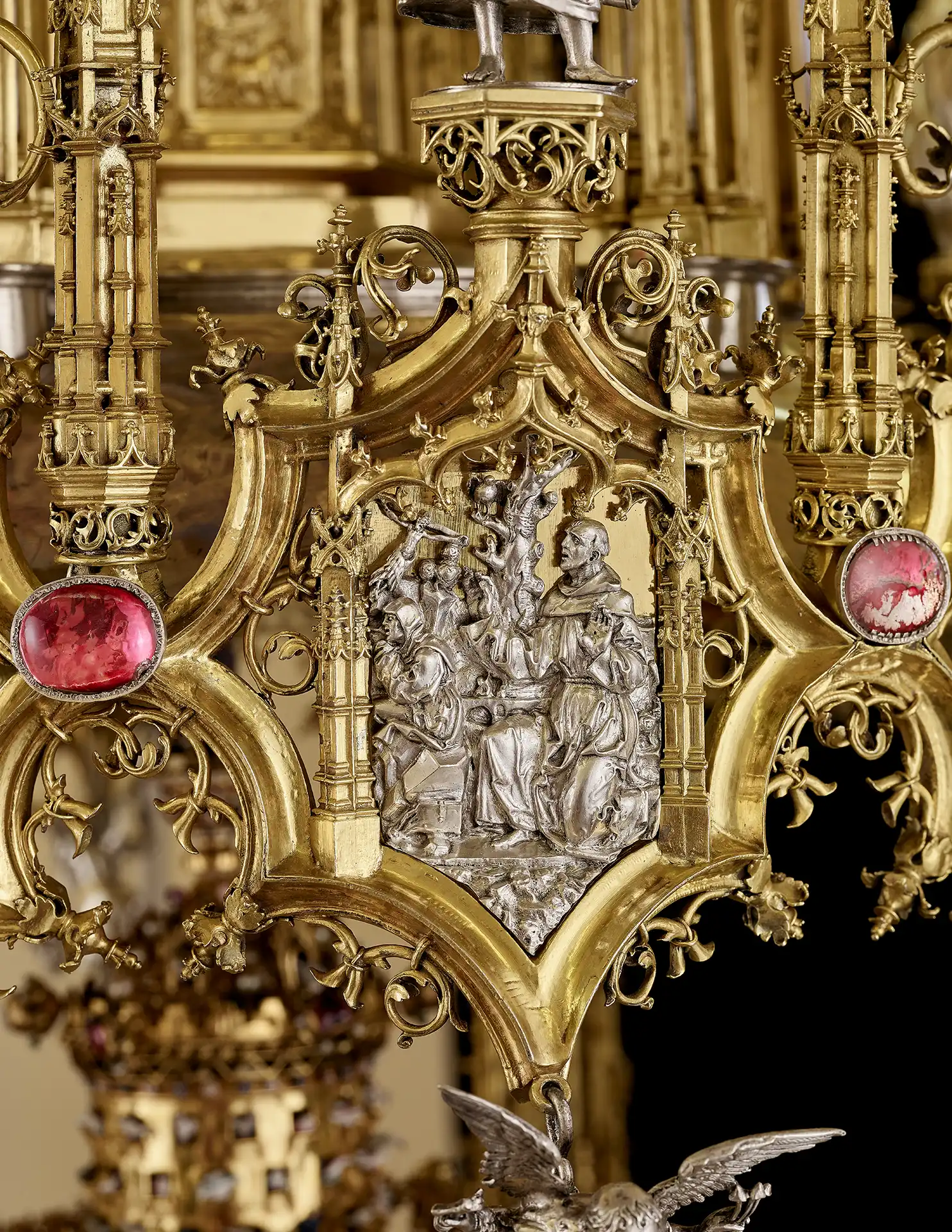
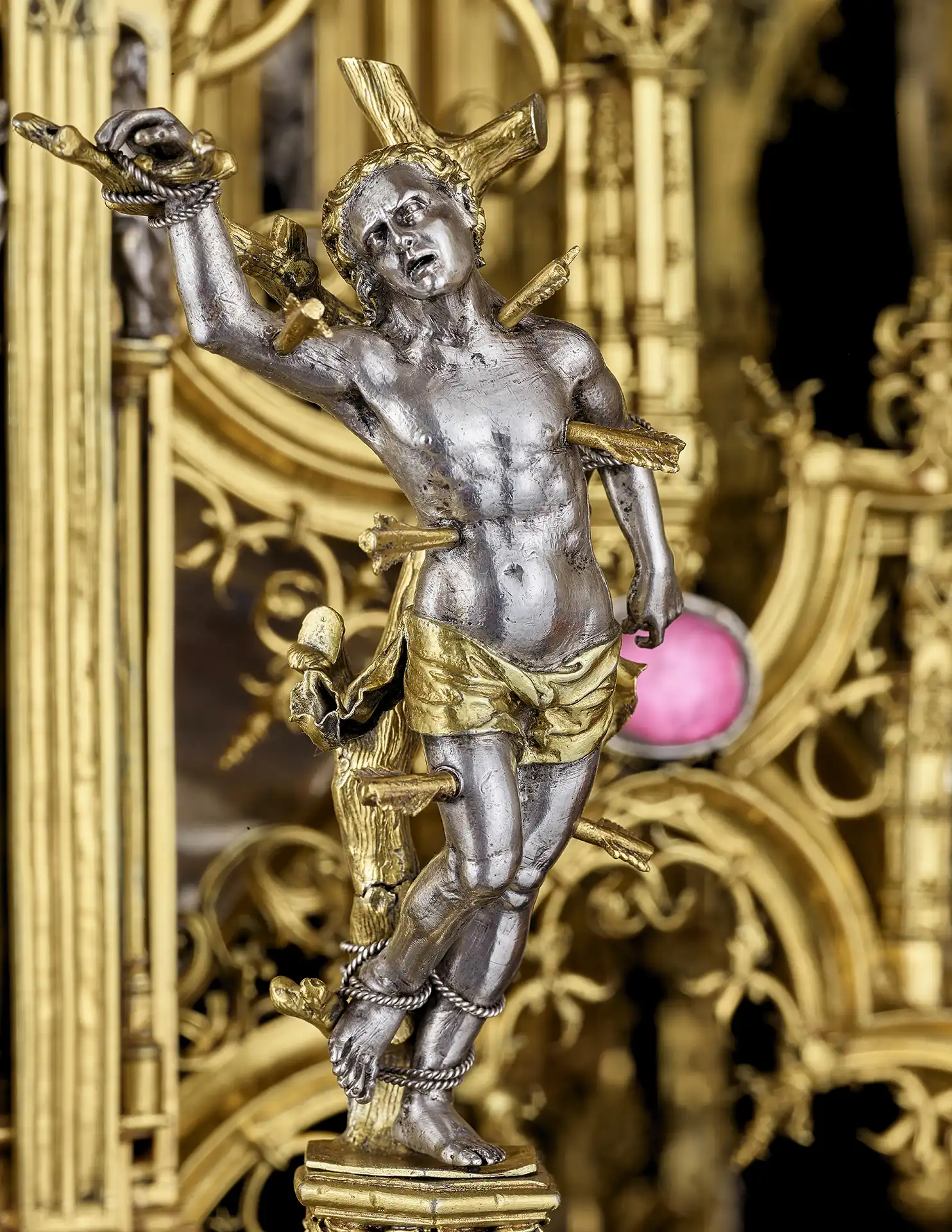
Within the first tier is preserved an even older jewel: the golden ostensorium acquired by the Cathedral Chapter at the auction of Queen Isabella the Catholic in 1505, attributed to the Catalan goldsmith Jaume Aimeric. Designed as a portable piece, it rests on a star-shaped base and a shaft with a stepped, temple-like knop that houses, in enamel and full relief, the figures of Saint James, Saint John the Baptist, Saint Peter, Saint Paul, Saint John the Evangelist, and the Virgin Mary. On its prismatic neck appear niches with Saint Sebastian, Saint Christopher, Saint Francis, and the Virgin in enameled relief.
Above this ensemble rises a small six-columned temple decorated with ears of wheat, clusters of grapes, and vine leaves—symbols of the Eucharistic bread and wine. Inside is the luna, set with emeralds, garnets, pearls, and diamonds, topped by a straight-armed cross and crowned by a cylindrical dovecote from which small enameled doves emerge, together with a large sapphire.
The first tier of Arfe’s Custodia—where this golden ostensorium is housed—is covered by a star vault with curved ribs and tiercerons, whose gilded ribs converge on a central boss adorned with enamels and gemstones. Eighteen rosettes with cherub heads decorate the intrados, interspersed with six angel medallions in half relief: three holding small bells, and the other three—now lost—once bearing censers. Between the ribs are set twelve enameled cabochons with stars, tiny universes of light that seem to vibrate as the silver reflects the sun.
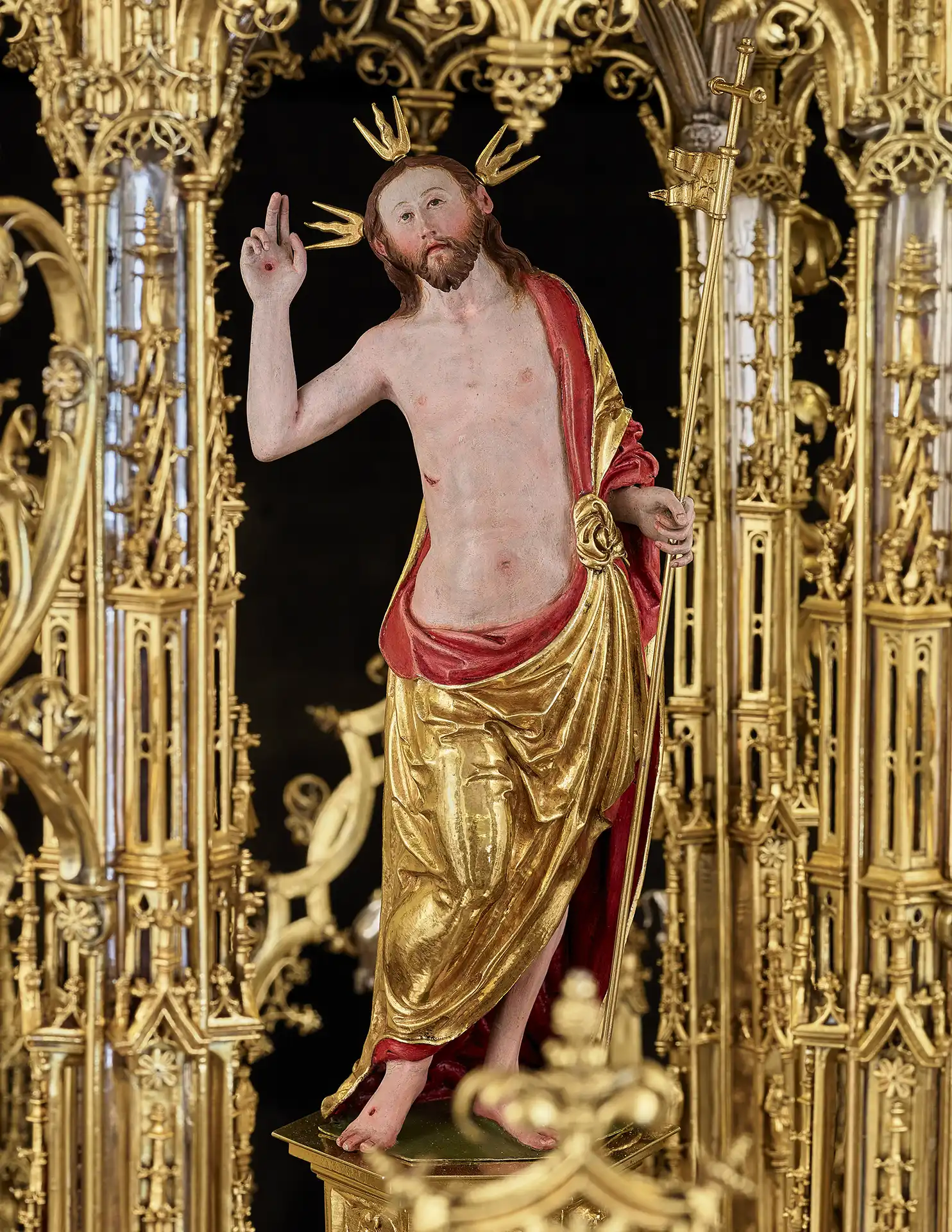
The upper tiers continue the ascent: prophets and apostles hold scrolls bearing biblical verses; the Theological Virtues crown the edges; and at the summit, the Risen Christ blesses the whole, surrounded by angels in motion. Above the final temple, a bulbous finial supports the Dove of the Holy Spirit, and the ultimate crowning—work of the goldsmith Láynez—is a gilded silver cross set with eighty-six pearls and two emeralds.
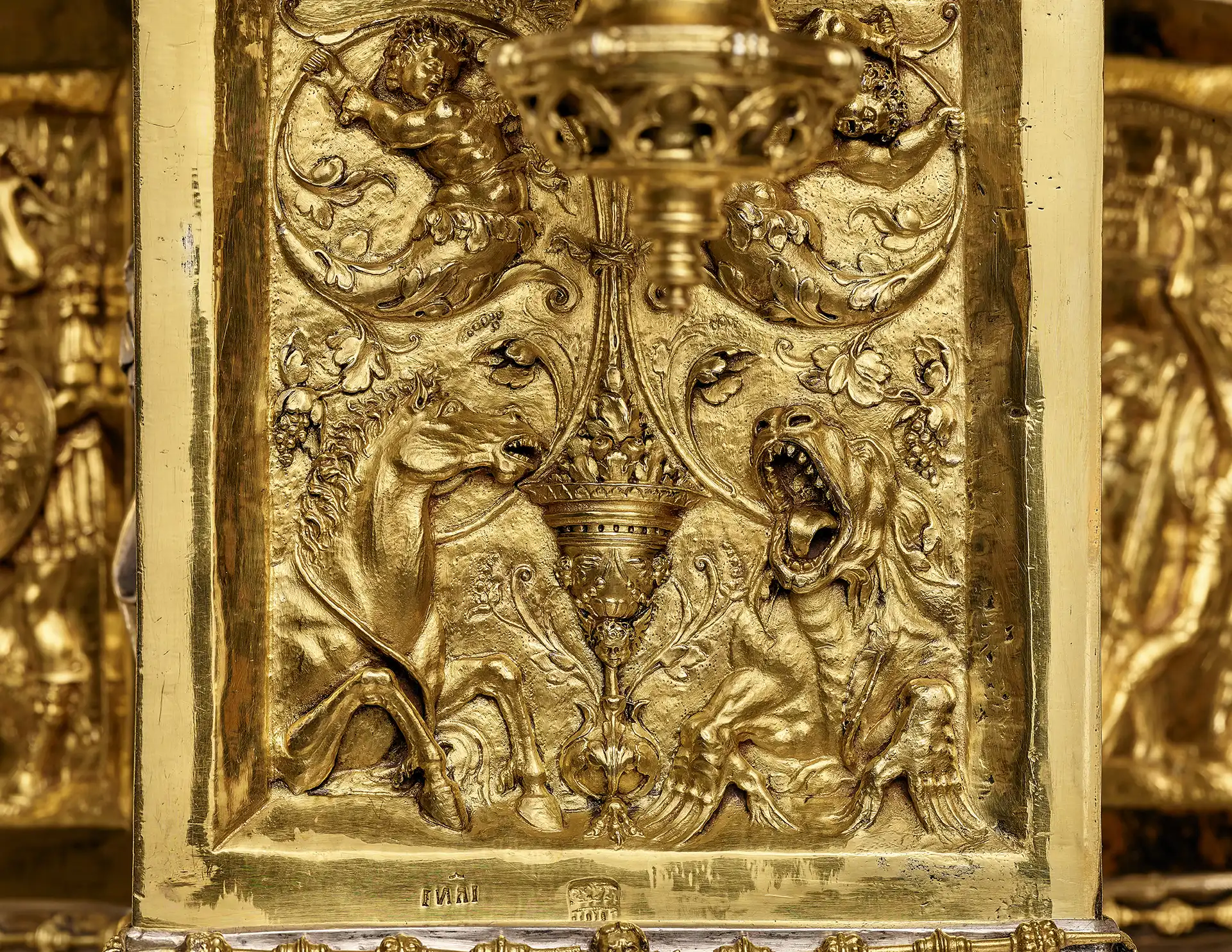
The Pedestal of the Angels, created by Manuel Bargas Machuca in 1741 following designs by Narciso Tomé, supports this miraculous architecture. Since 1781, the Custodia has processed through the streets of Toledo on a silver carriage fitted with a balancing mechanism that maintains its verticality along the city’s slopes. In 2015, the entire work was dismantled piece by piece—3,801 numbered fragments—for a comprehensive restoration that replaced its wooden framework with an internal aluminum structure, invisible yet secure.
Each year, on Corpus Christi, the Custodia emerges from the shadows and becomes the center of a procession that seems to suspend time itself. Sunlight glints off its pinnacles, the tiny faces of its angels, the enamels and gemstones that blaze like a sacred fire. And Toledo, bathed in its radiance, appears to relive the miracle for which it was conceived: to make the invisible visible.