The Garden of Silence
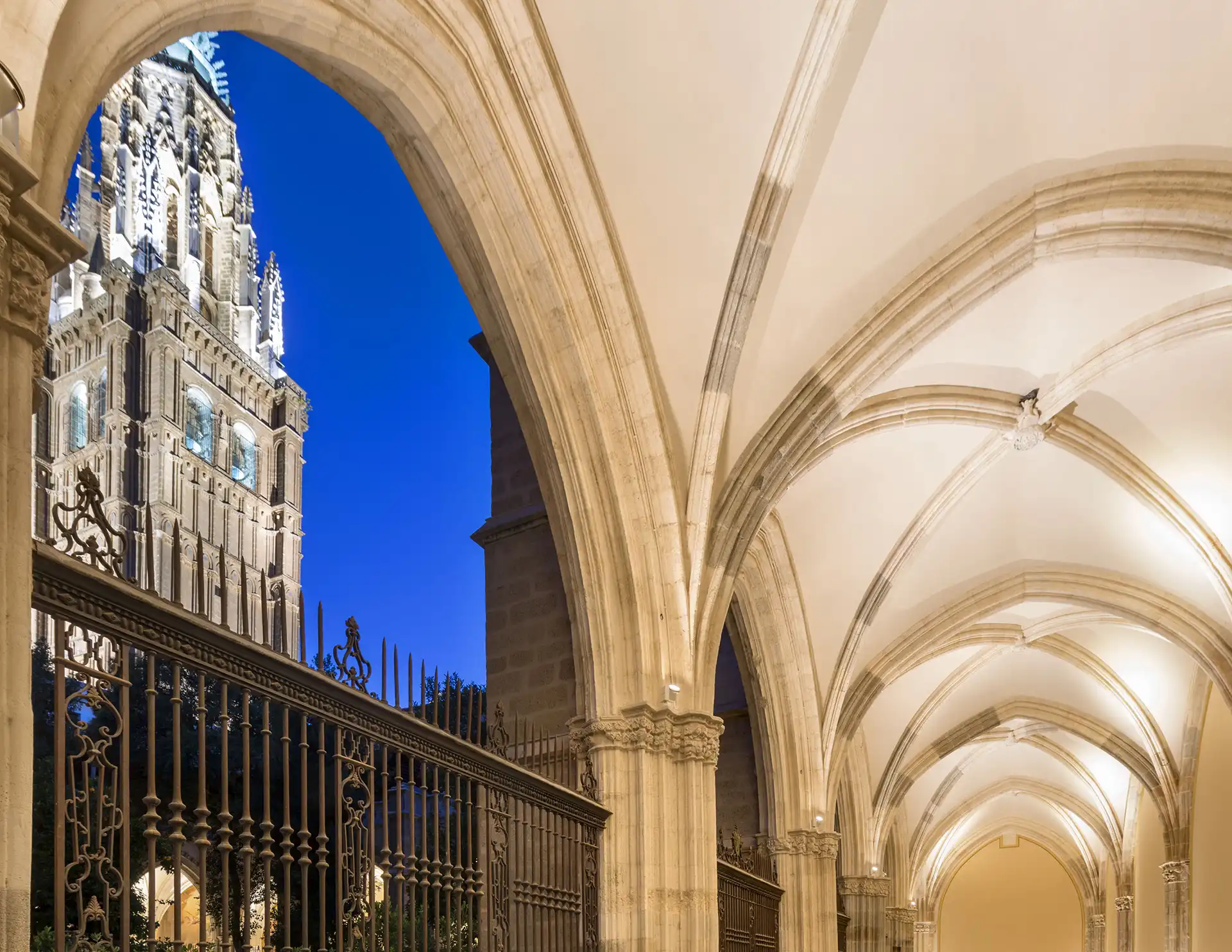
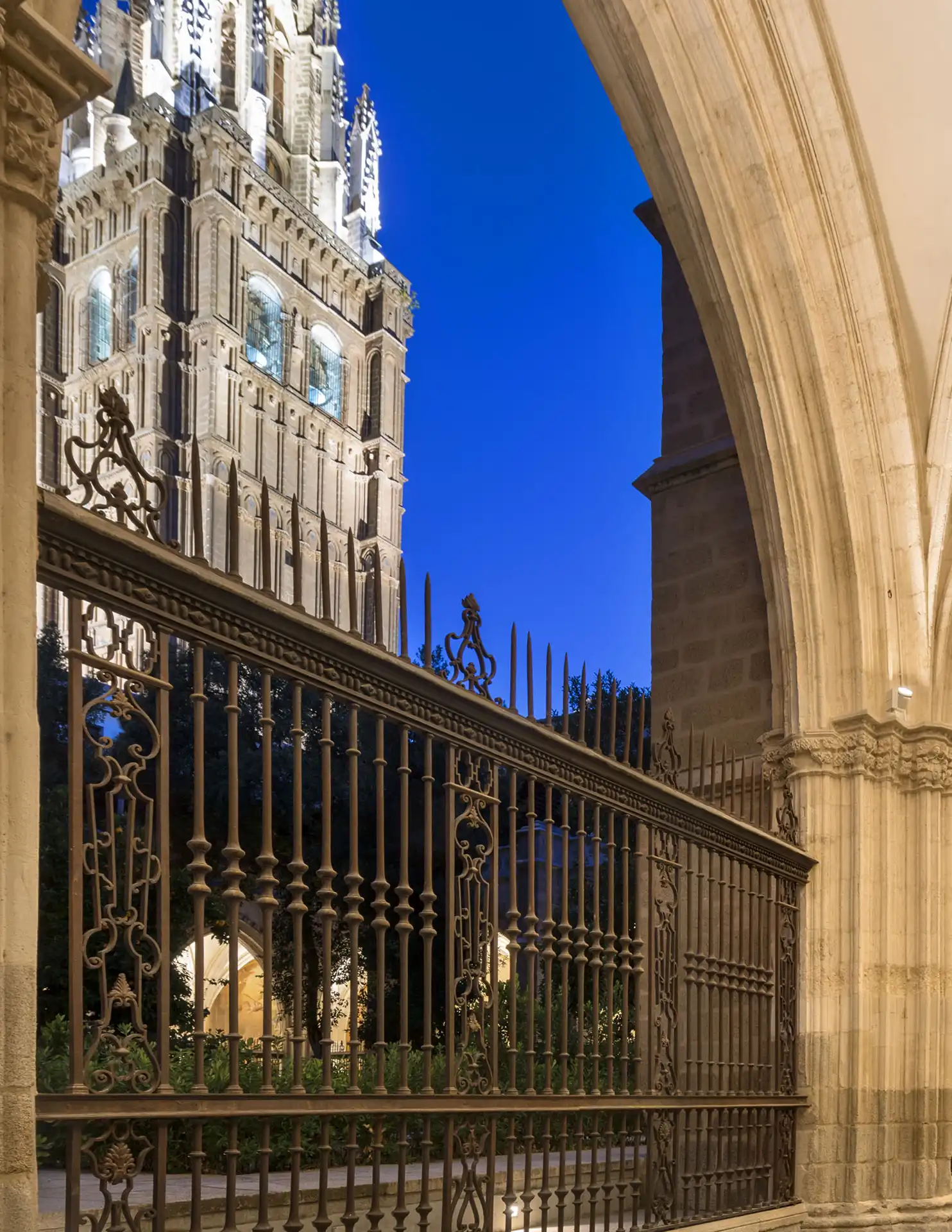
Extending along the northern flank of the Cathedral, the Cloister unfolds as a space of stone and light, conceived both as a place of passage and of contemplation. Construction began in 1389 under Archbishop Pedro Tenorio and was completed in the 15th century by his successor Juan Martínez Contreras. The design, by master builder Rodrigo Alfonso, presents a Gothic structure of four vaulted galleries opening onto a central courtyard, where cypresses and orange trees still grow — heirs to the ancient monastic garden.
The cloister walls are populated by tombs, coats of arms and epitaphs commemorating canons, archbishops and benefactors. Here processions, readings and devotional exercises once took place; here echoed the first lessons of the Choir School and the voices of the boy choristers accompanying the liturgy. Singular doorways open at its corners: one leading to the Chapter House, another to the Treasury, and another to the Chapel of Saint Blaise — the pantheon of late medieval archbishops, decorated with early 15th-century Italianate frescoes.
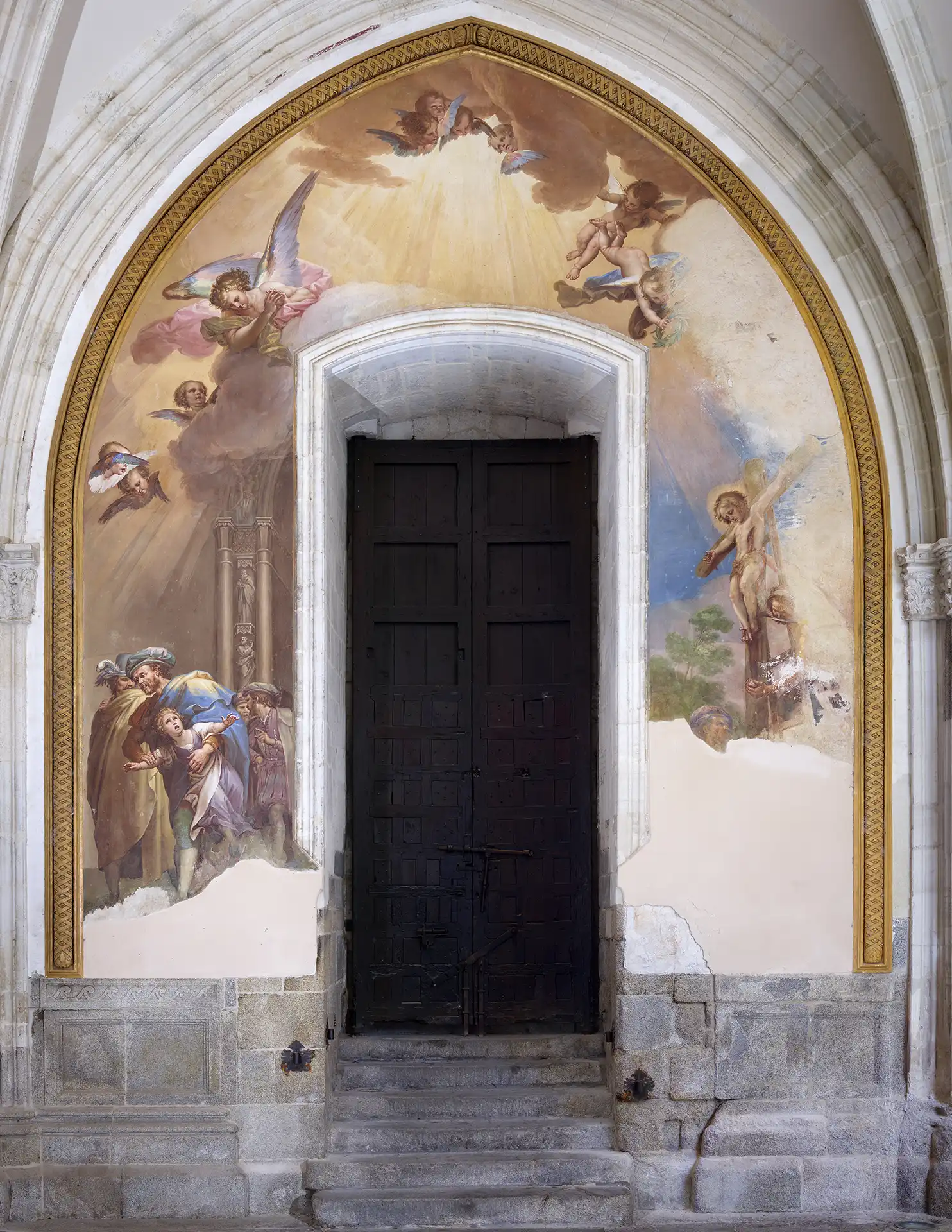
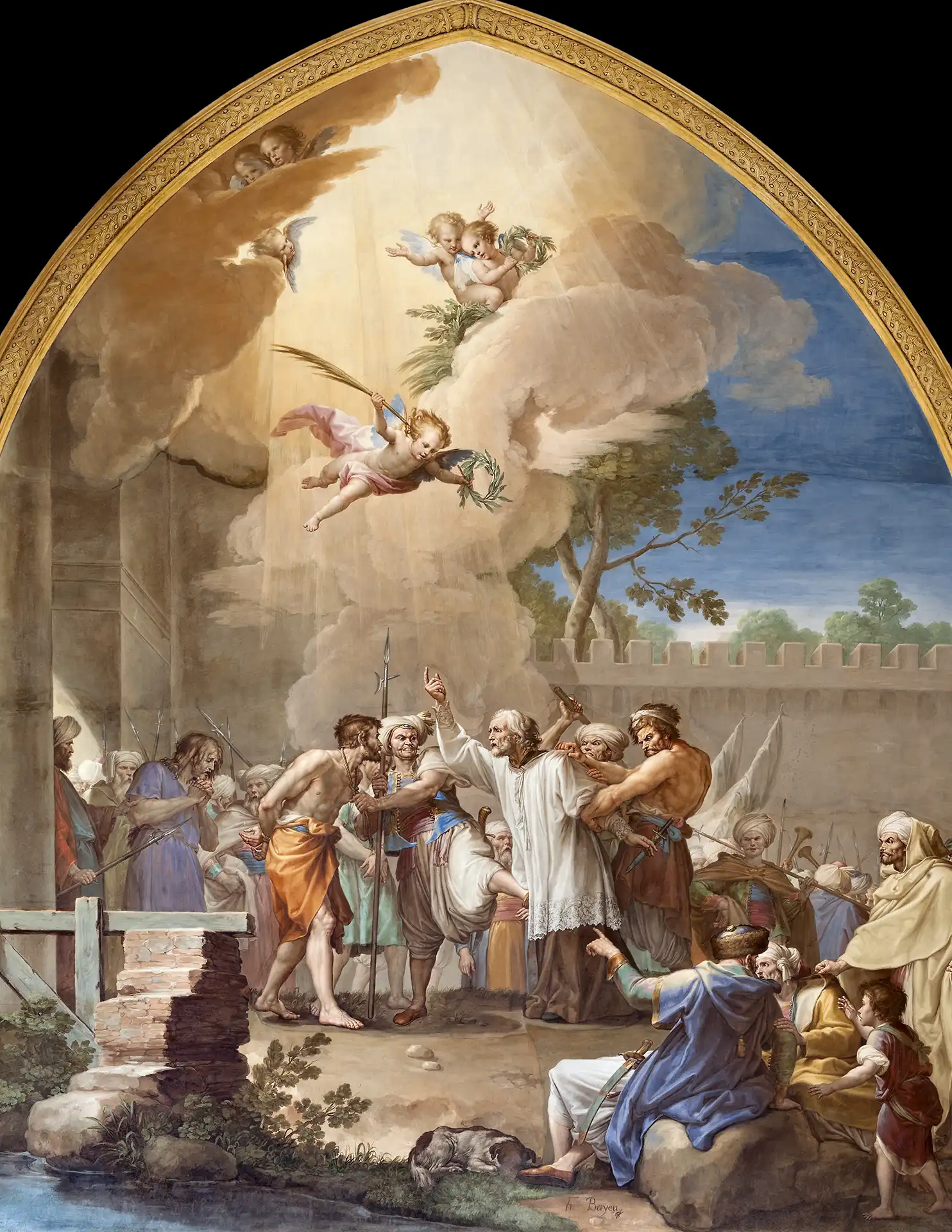
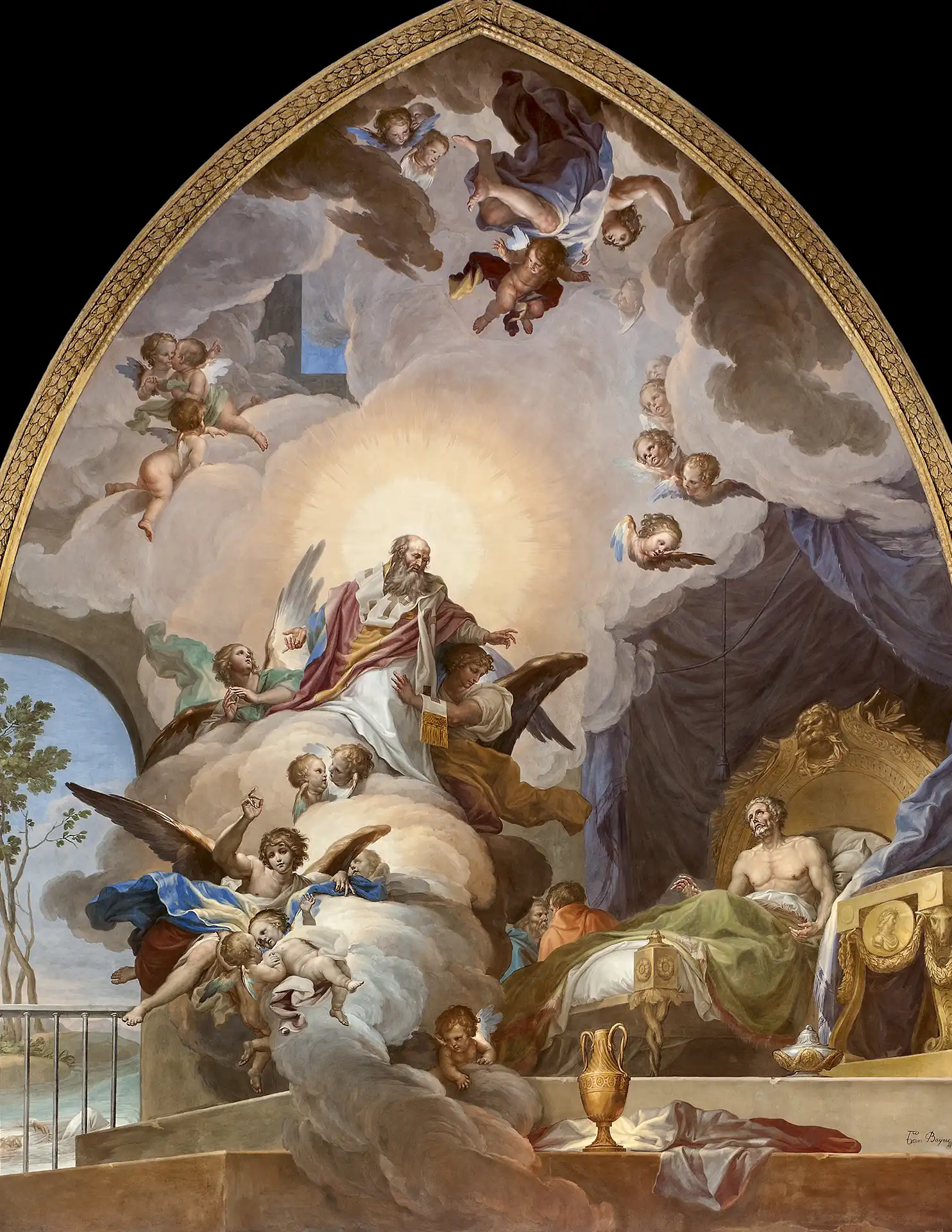
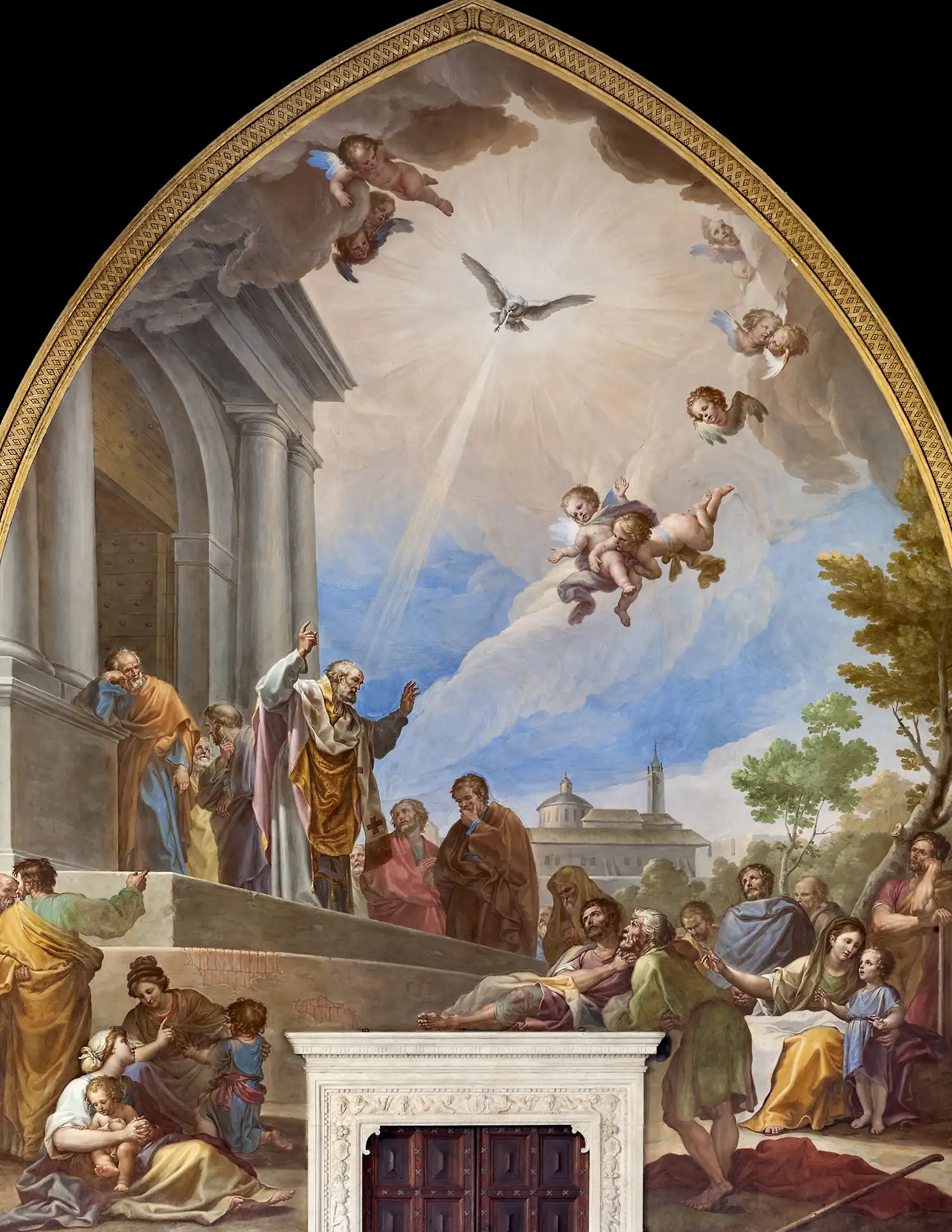
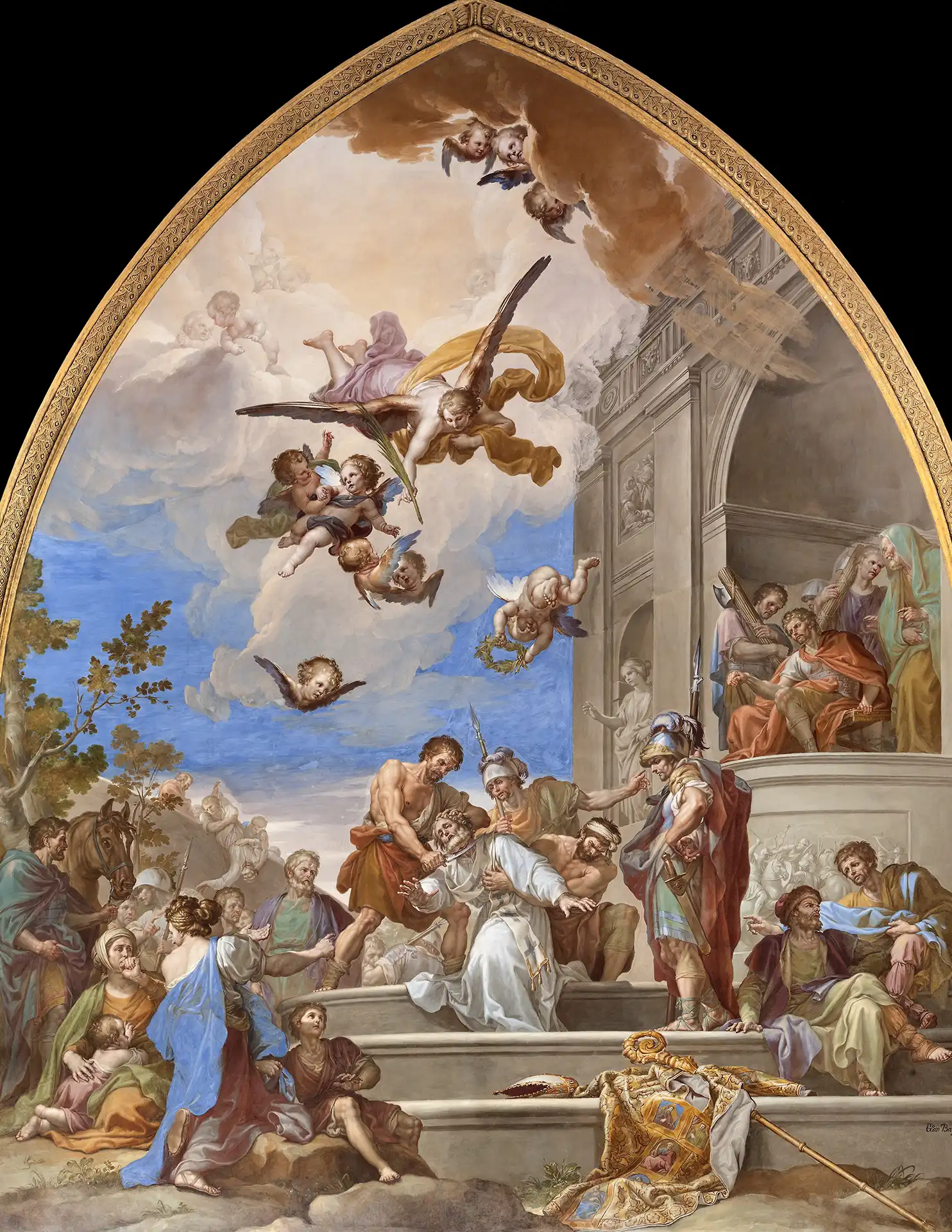
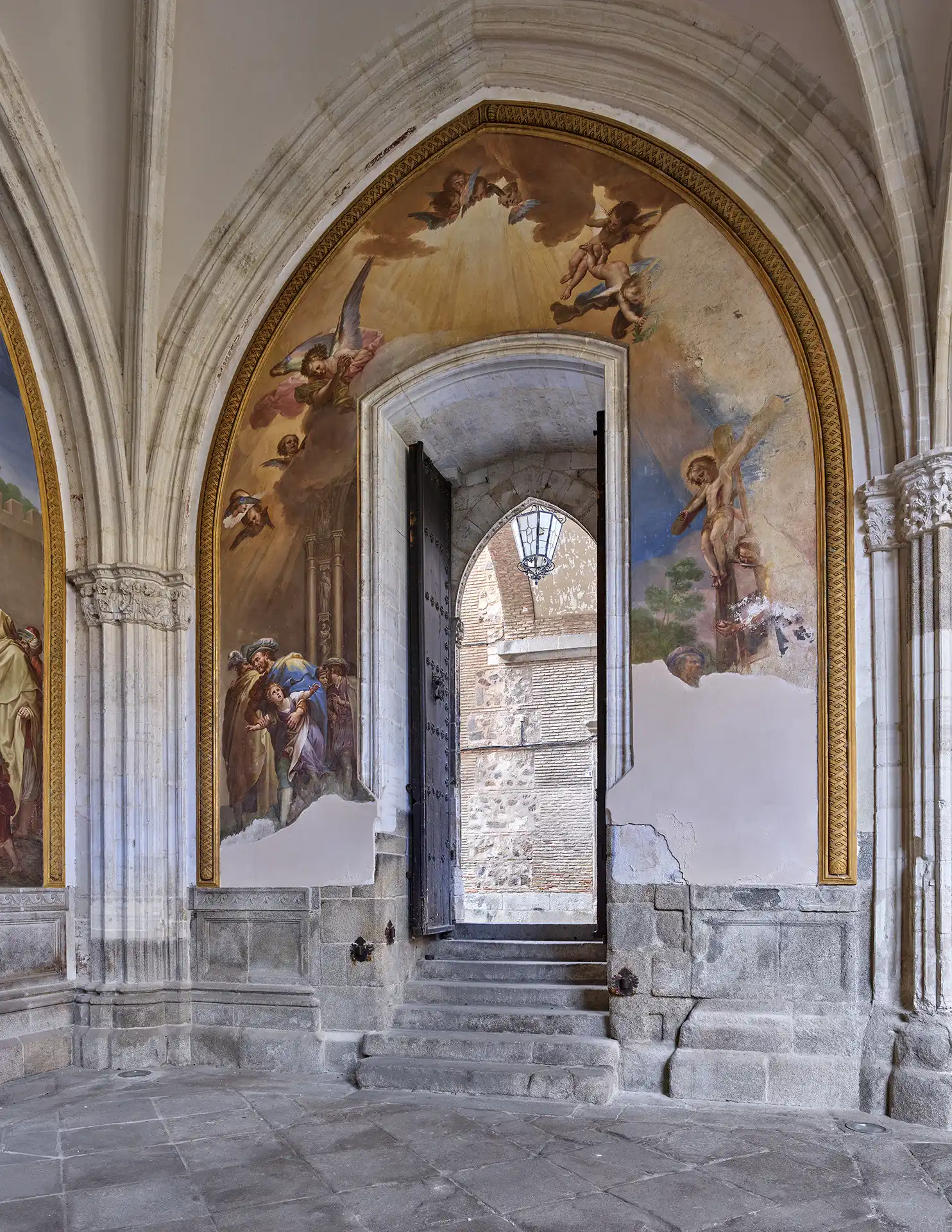
Over the centuries, the cloister underwent transformation. In the 18th century, Cardinal Luis de Borbón ordered its walls adorned with a narrative fresco cycle commissioned from Francisco Bayeu y Subías, brother-in-law of Goya and court painter to Charles III. The twenty-seven scenes depict episodes from the lives of the Virgin and Christ, integrating architecture, landscape and figures with a fully Enlightenment sensibility.
Today, the Lower Cloister is a space of serene movement, where the murmur of footsteps and the diagonal fall of light through the arches create a music of their own. Time seems to slow; the stones preserve memory, and silence carries echoes of prayer.
Between the golden shadows of its vaults and the green of the central garden, the visitor senses that this Gothic gallery is more than a corridor: it is the contemplative heart of the Cathedral — a reminder that all greatness requires a moment of stillness.