The Voice of the Cathedral
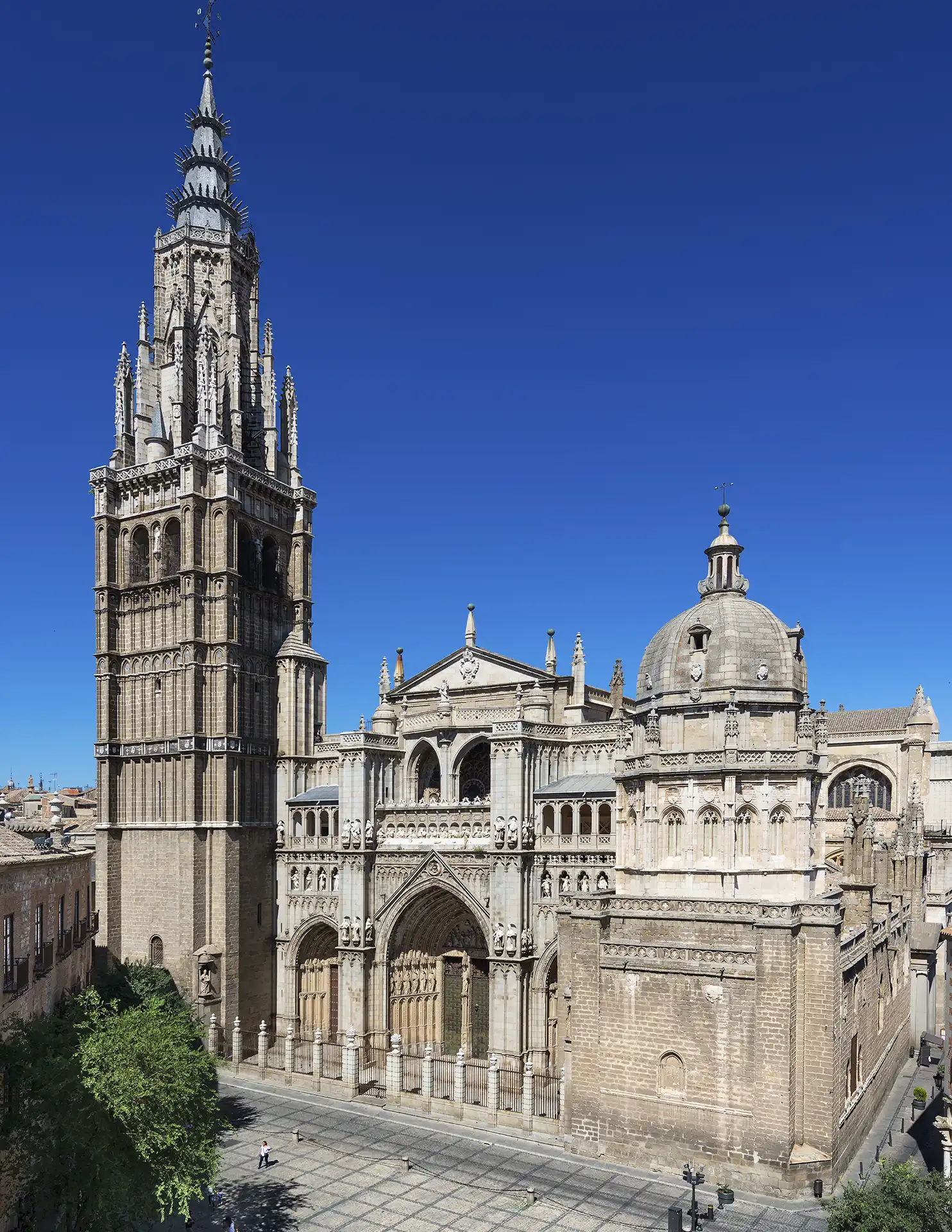
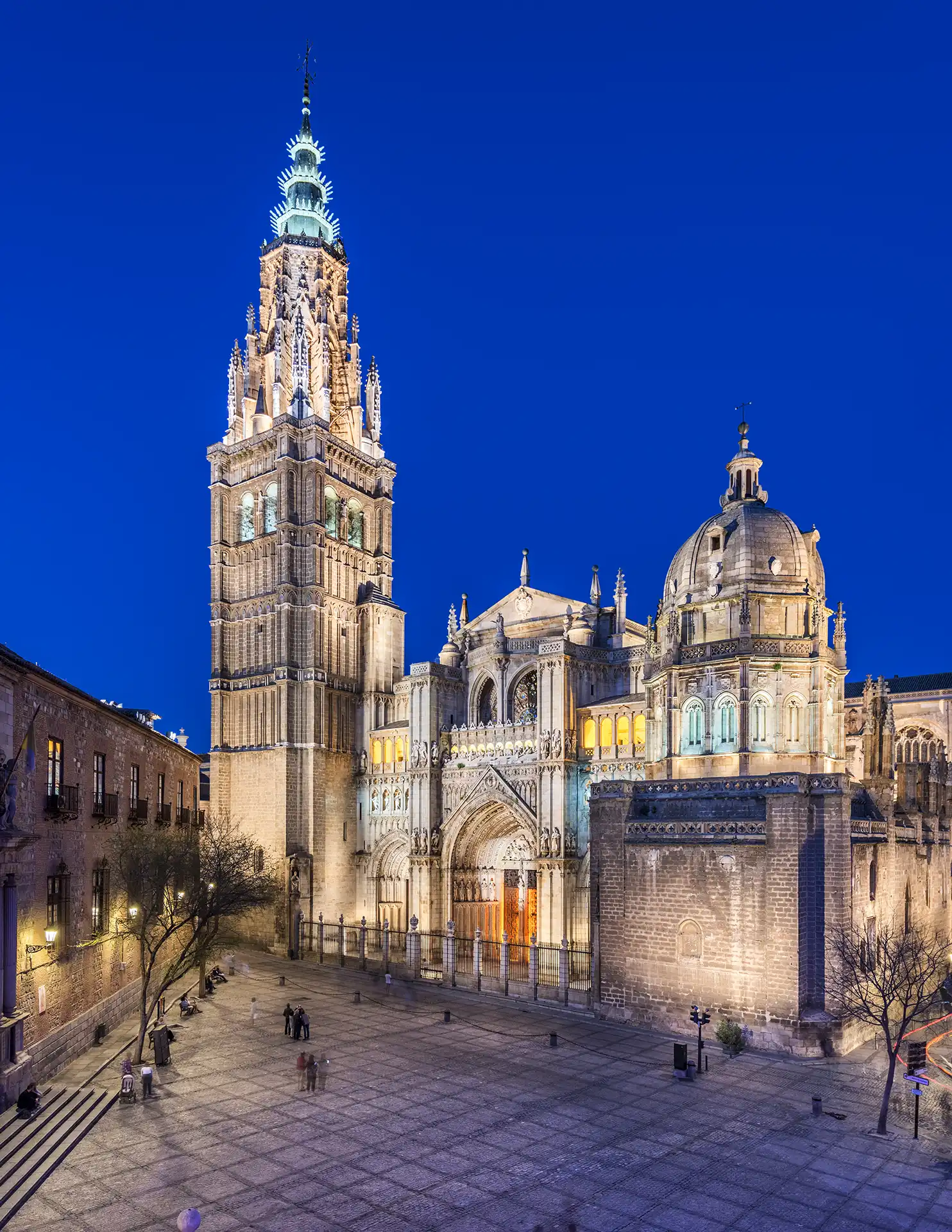
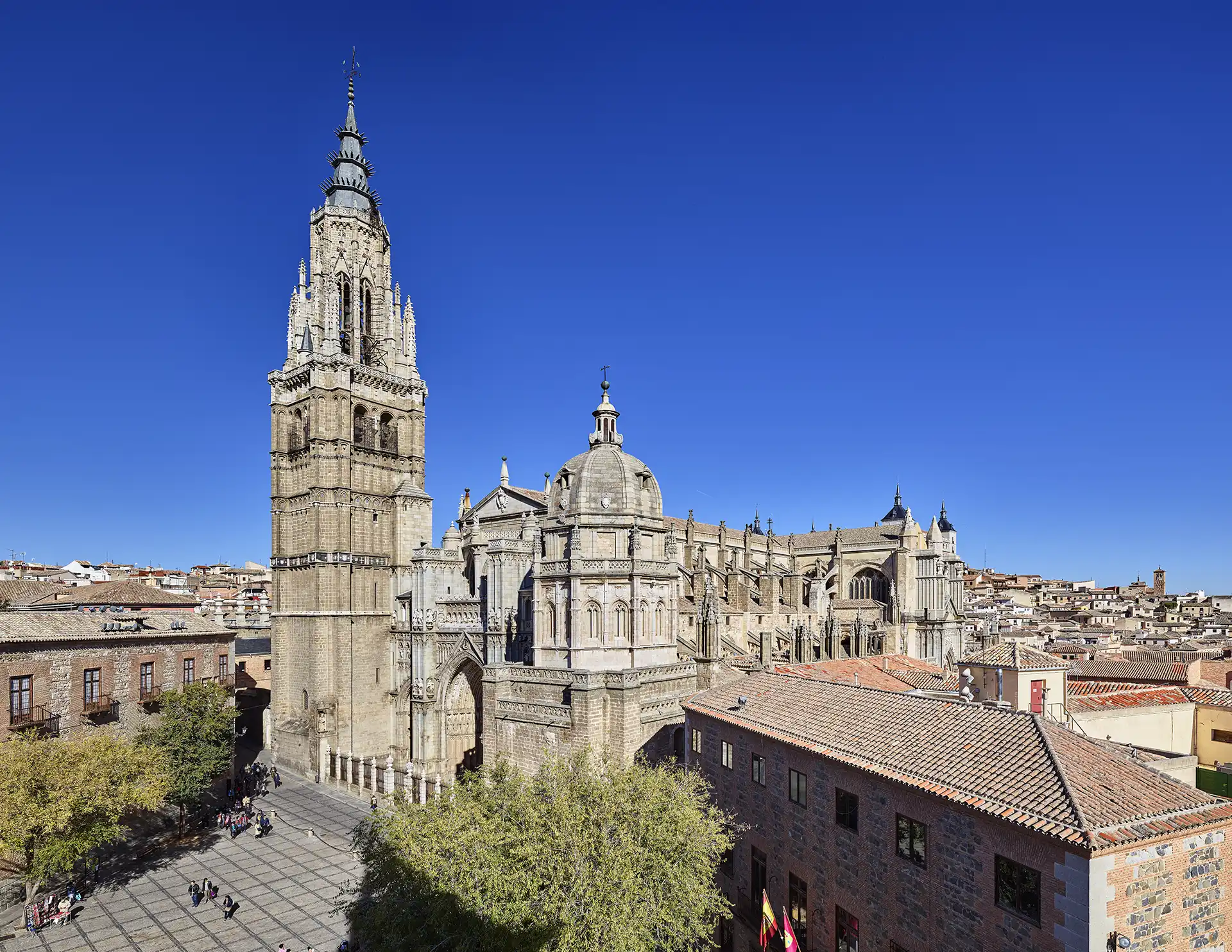
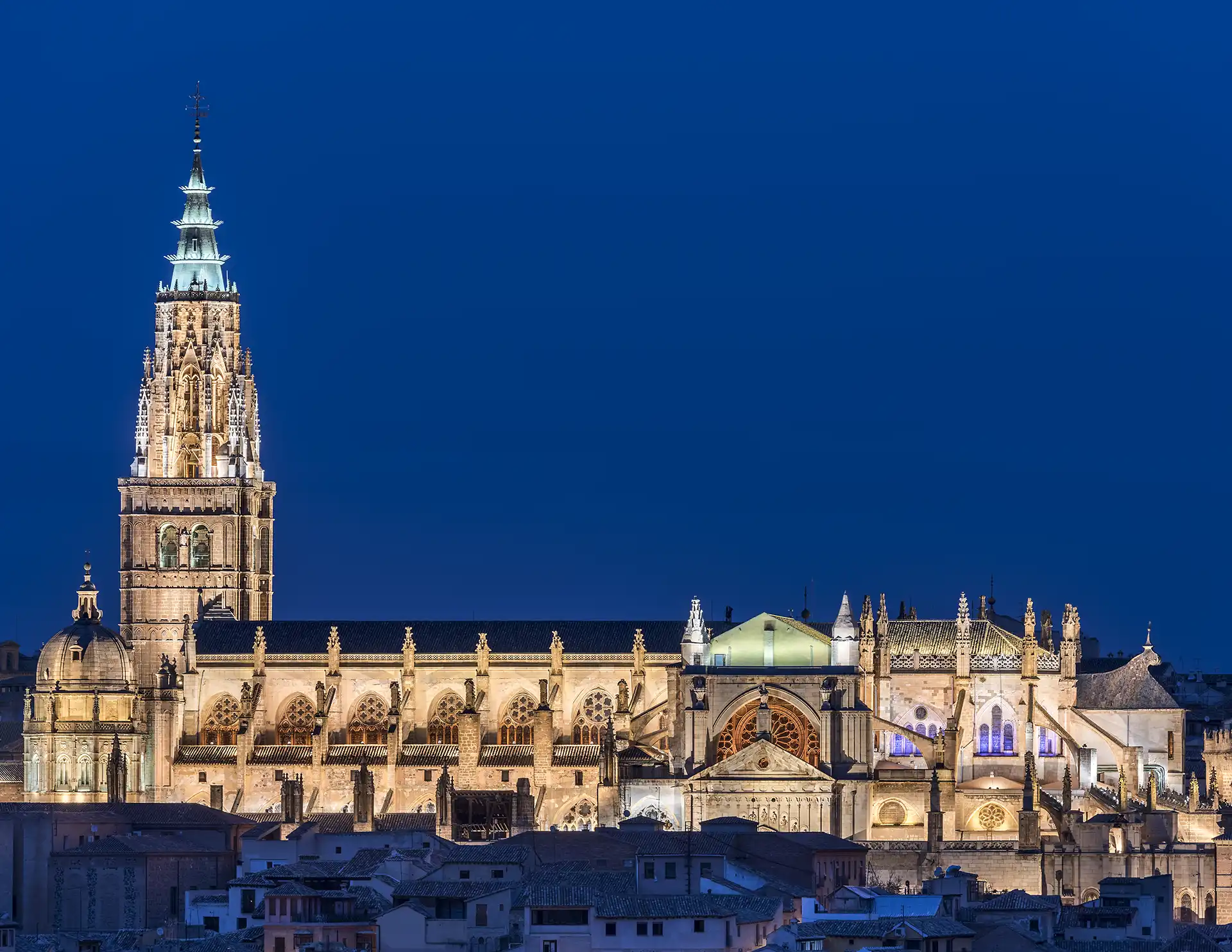
Rising above the northern side of the crossing, the Bell Tower of the Cathedral of Toledo dominates the city like a stone beacon. Its unmistakable silhouette, etched into Toledo’s skyline, was built between 1380 and 1422 under the patronage of Archbishop Pedro Tenorio, following the designs of master builders Rodrigo Alfonso and Alvar Martínez.
Standing 92 metres high, the tower combines elegance and power. Its square plan rises through five diminishing stages that blend the languages of Toledan Gothic and Mudéjar, a synthesis that encapsulates the spirit of the city itself. Buttresses transform into pinnacles, traceried openings into stone latticework, and a sharp pyramidal spire of wrought iron crowns the structure like a needle piercing the sky.
Inside, a spiral staircase of 300 steps leads to the clock chamber and the belfry. The most famous of its bells is the legendary Great Bell (Campana Gorda), cast in 1753 by Alejandro Gargallo. With a diameter of nearly three and a half metres and a weight exceeding seventeen tonnes, it was long considered one of the largest bells in Europe. Its immense size, however, made it almost impossible to ring without endangering the building. A crack that appeared after its first attempt at sounding condemned it to silence, yet its presence remains overwhelming. On its surface can still be read inscriptions and reliefs glorifying the Most Holy Sacrament and the Virgin of the Sagrario.
Higher up, other bells — such as Saint Eugenius, Saint Ildefonso and Saint John the Baptist — continue to mark the liturgical and festive rhythms of the city. From the upper lantern, the view opens over the rooftops of Toledo, the River Tagus and the surrounding plain: a panorama that seems to encapsulate the entire history of the city and its Cathedral.
The tower was conceived not merely as a functional structure, but as a visible symbol of faith. Its shadow accompanies the city each day, and its voice — when the great bells are rung — reminds the people of Toledo, as it has for more than six centuries, that time and the soul are measured to the same rhythm.