The Cathedral’s Carved Voice
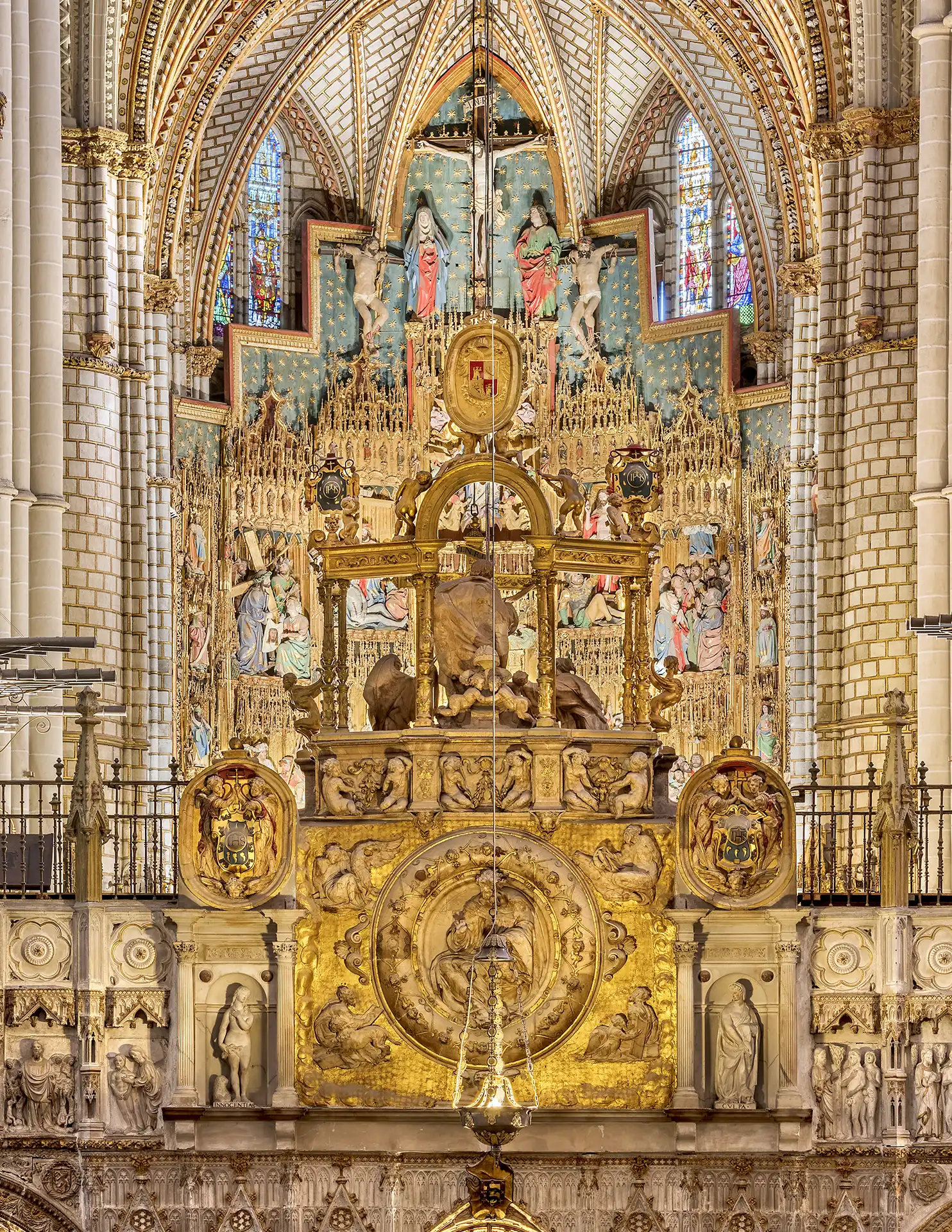
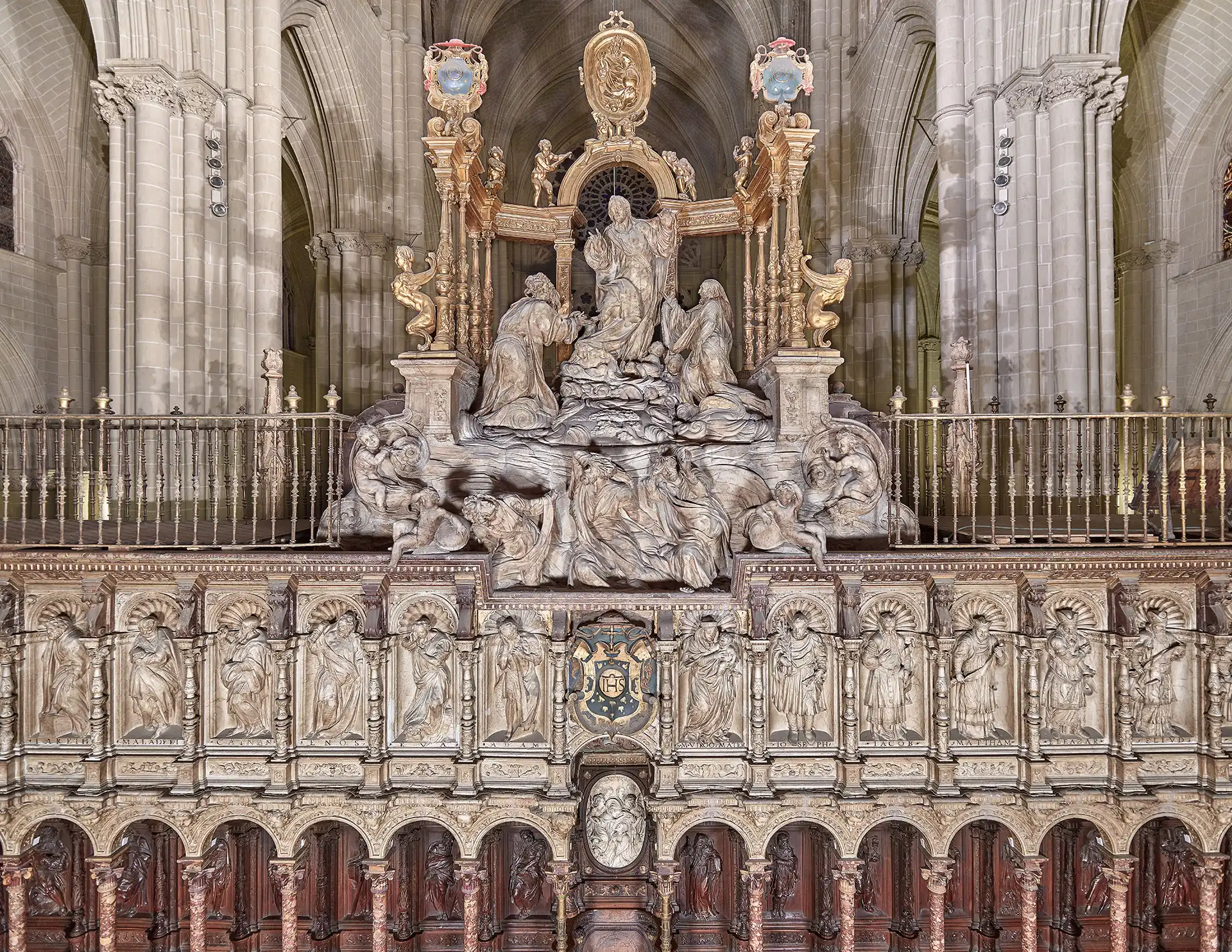
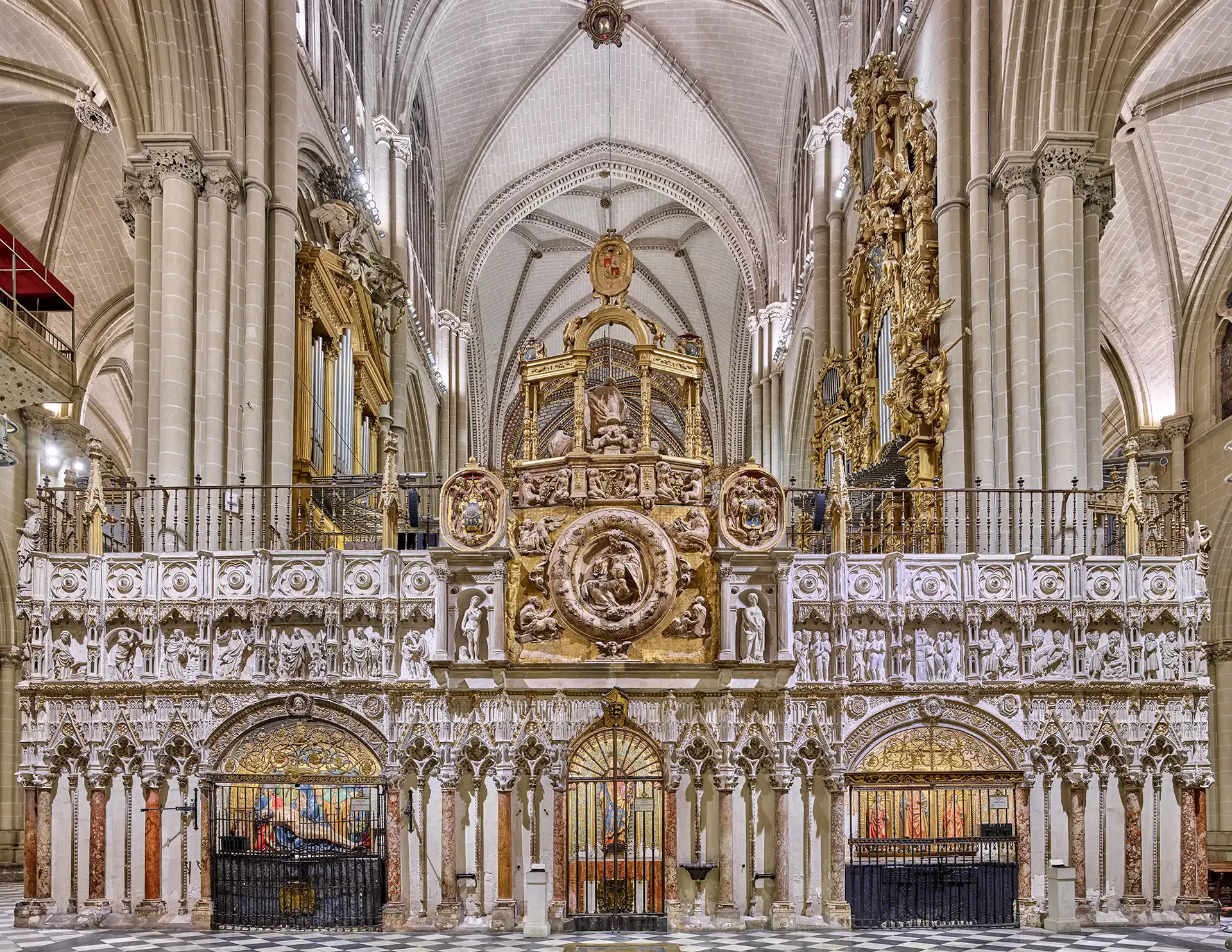
At the centre of the main nave, beneath the crossing vault, rises the Choir — the musical and spiritual heart of the Cathedral. Its Renaissance grille, crafted by Domingo de Céspedes between 1541 and 1548, encloses a space where art, liturgy and history have been interwoven for more than five centuries.
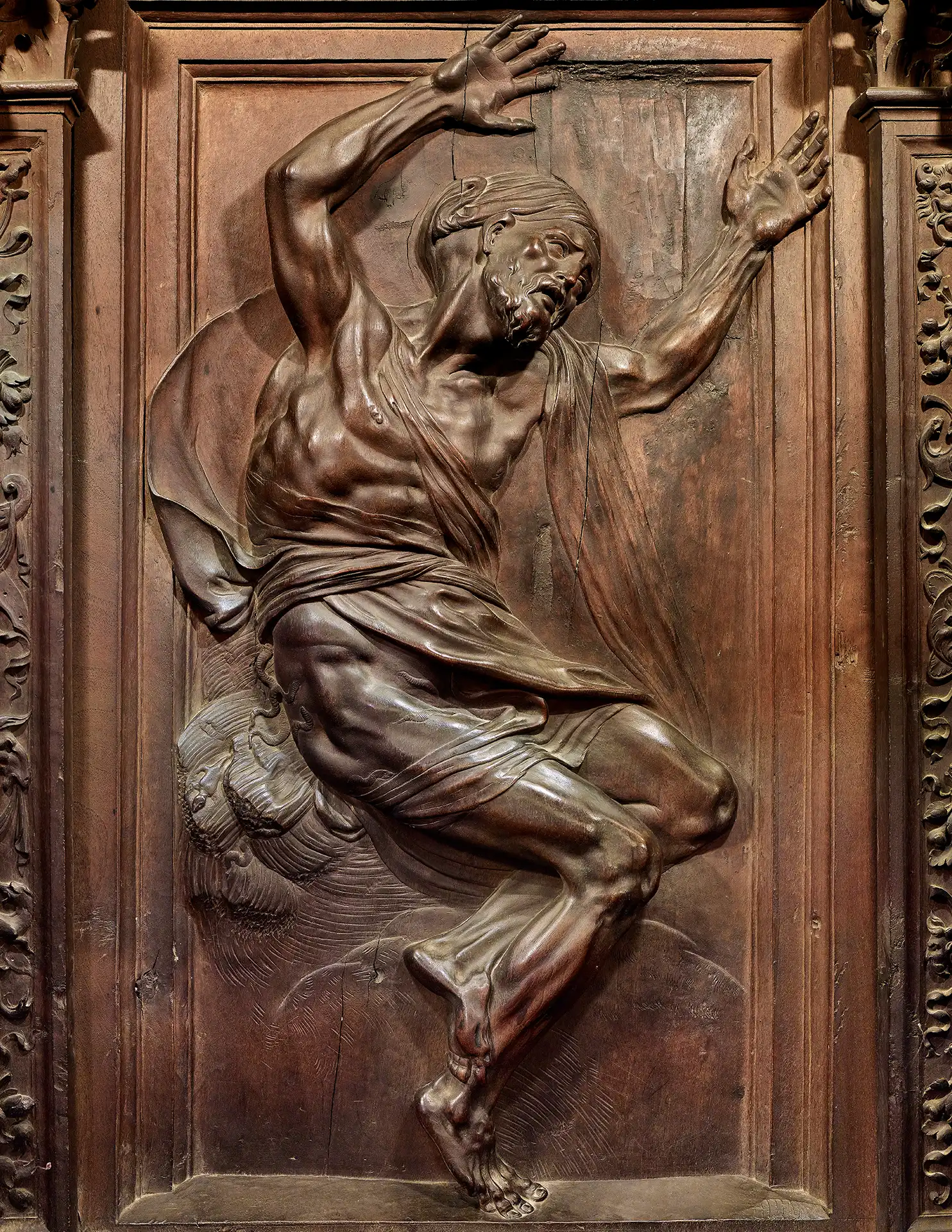
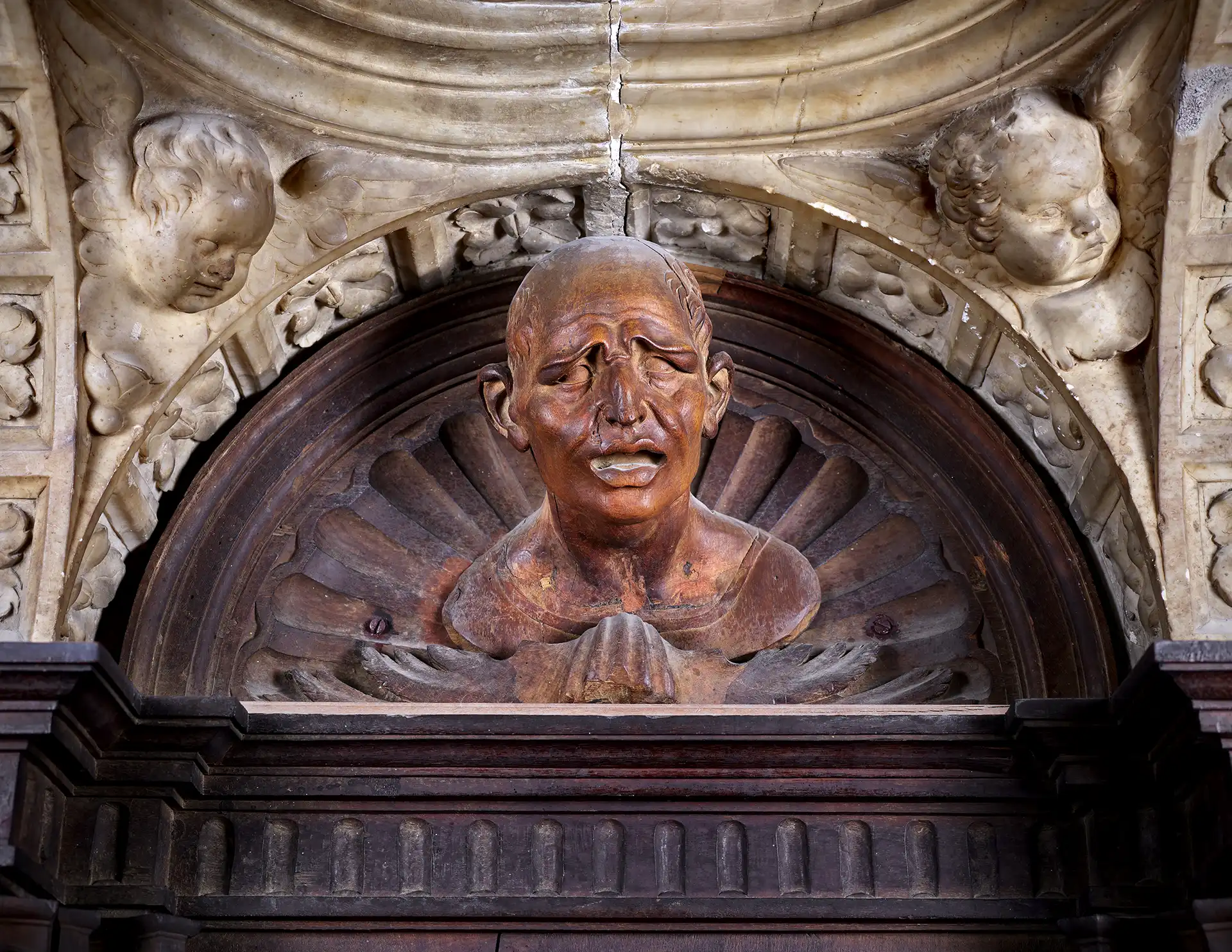
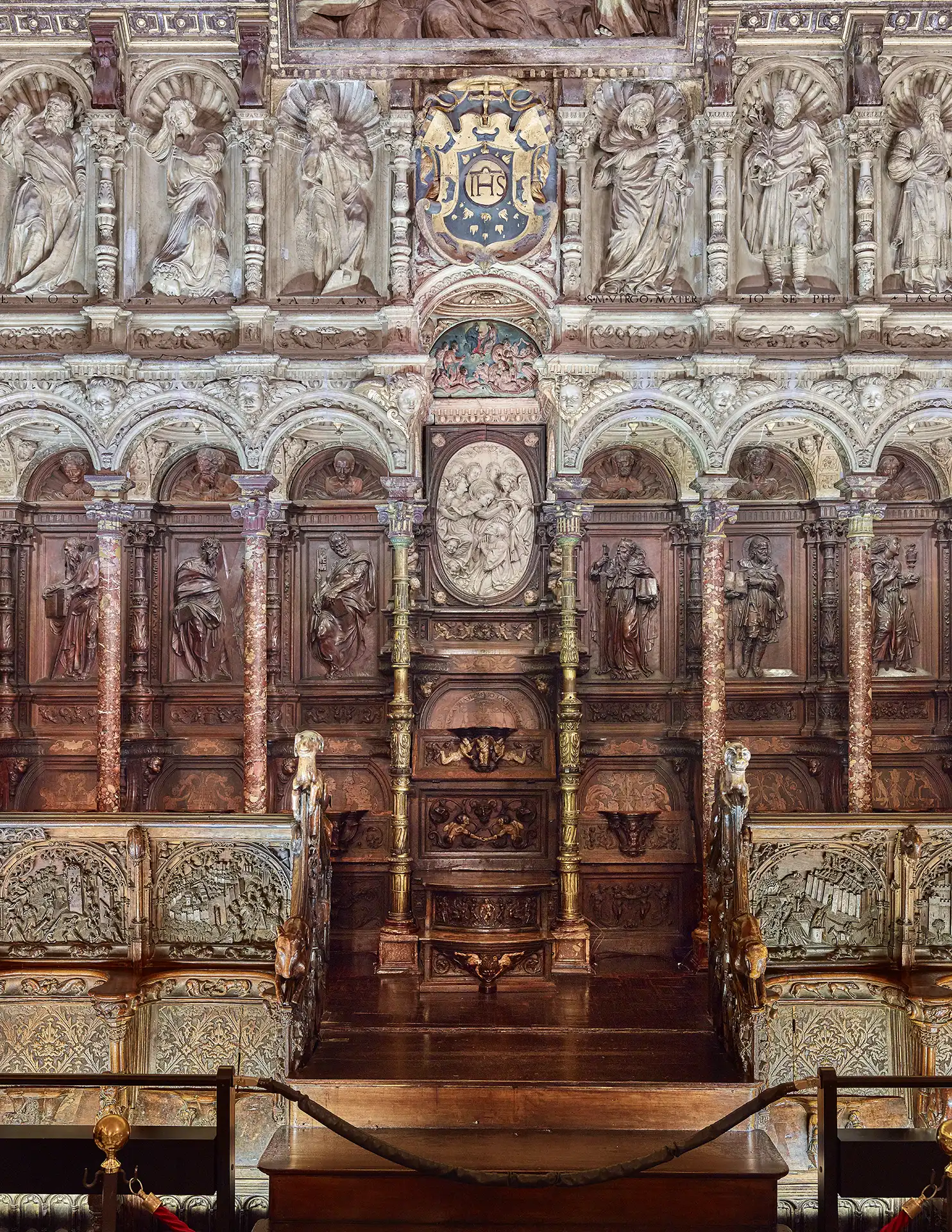
The lower stalls, carved in walnut by Rodrigo Alemán between 1489 and 1495, rank among the most extraordinary works of Hispanic Gothic sculpture. Across its fifty-four seats, the artist narrated the episodes of the conquest of Granada with meticulous realism, depicting battles, kings and bishops with an unprecedented vitality.
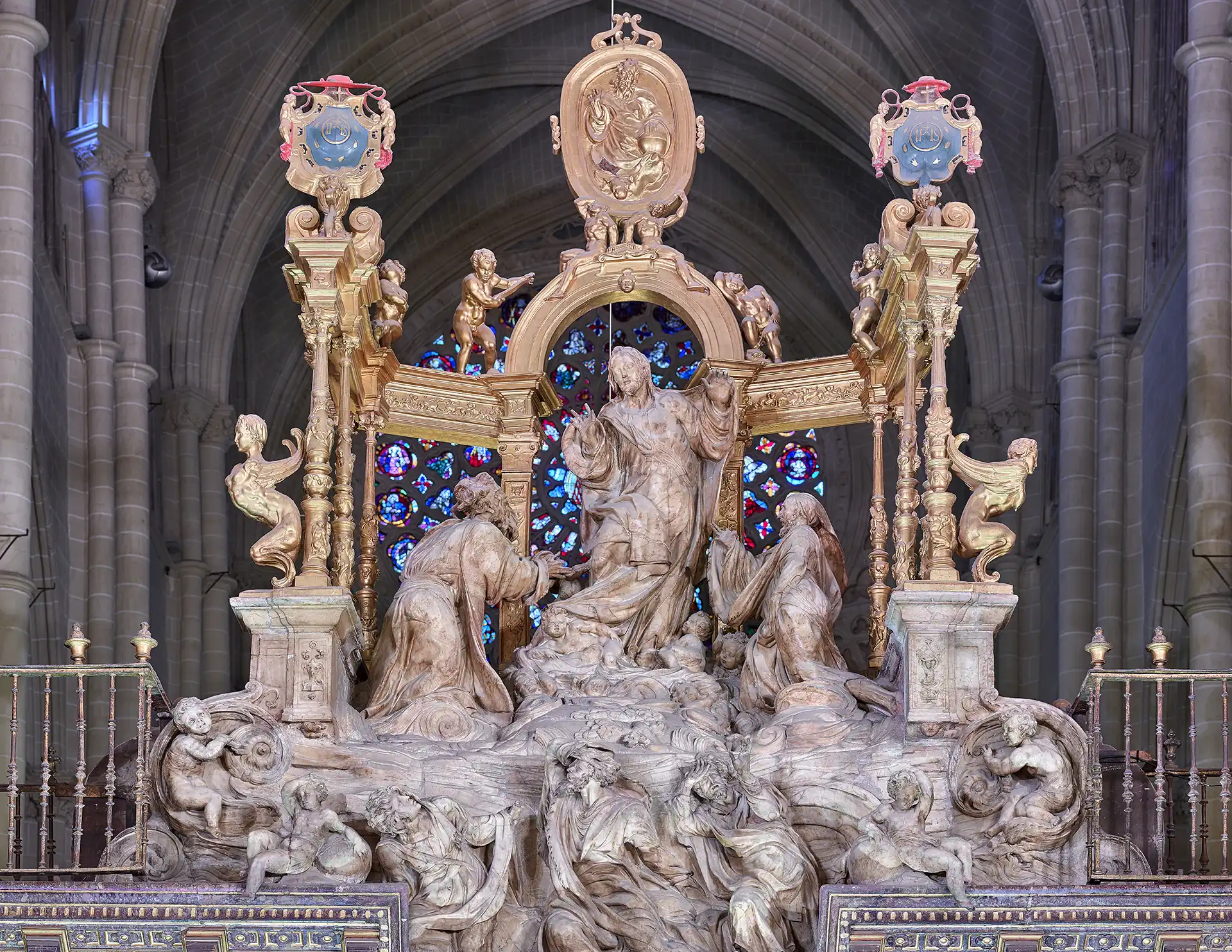
Above them stands the upper choir, carved by Felipe Bigarny (Vigarny) and Alonso Berruguete, who introduced the language of the Renaissance: prophets, martyrs and biblical figures rendered with an almost painterly dynamism. At the centre rises the Archbishop’s throne, adorned with marble and jasper reliefs and crowned by a Transfiguration of Christ designed by Berruguete himself.
The ensemble is completed by the side lecterns, made by Nicolás de Vergara the Elder and the Younger around 1570, and by the ancient Eagle Lectern, a German Gothic piece from 1425, symbol of Saint John the Evangelist.
On either side, the organs of the Gospel and the Epistle have engaged in dialogue since the eighteenth century during the celebrated organ battles, filling this forest of wood and stone with sound.
The Choir is not merely a place of song: it is a lesson in sacred art, where history, music and faith resonate as a single voice.