A Reliquary of Eternity
In the most reserved heart of the Cathedral, behind the Chapel of the Sagrario and beside the Major Sacristy, lies one of the most beautiful and symbolically charged spaces of the Cathedral of Toledo, Primate of Spain: the Ochavo.
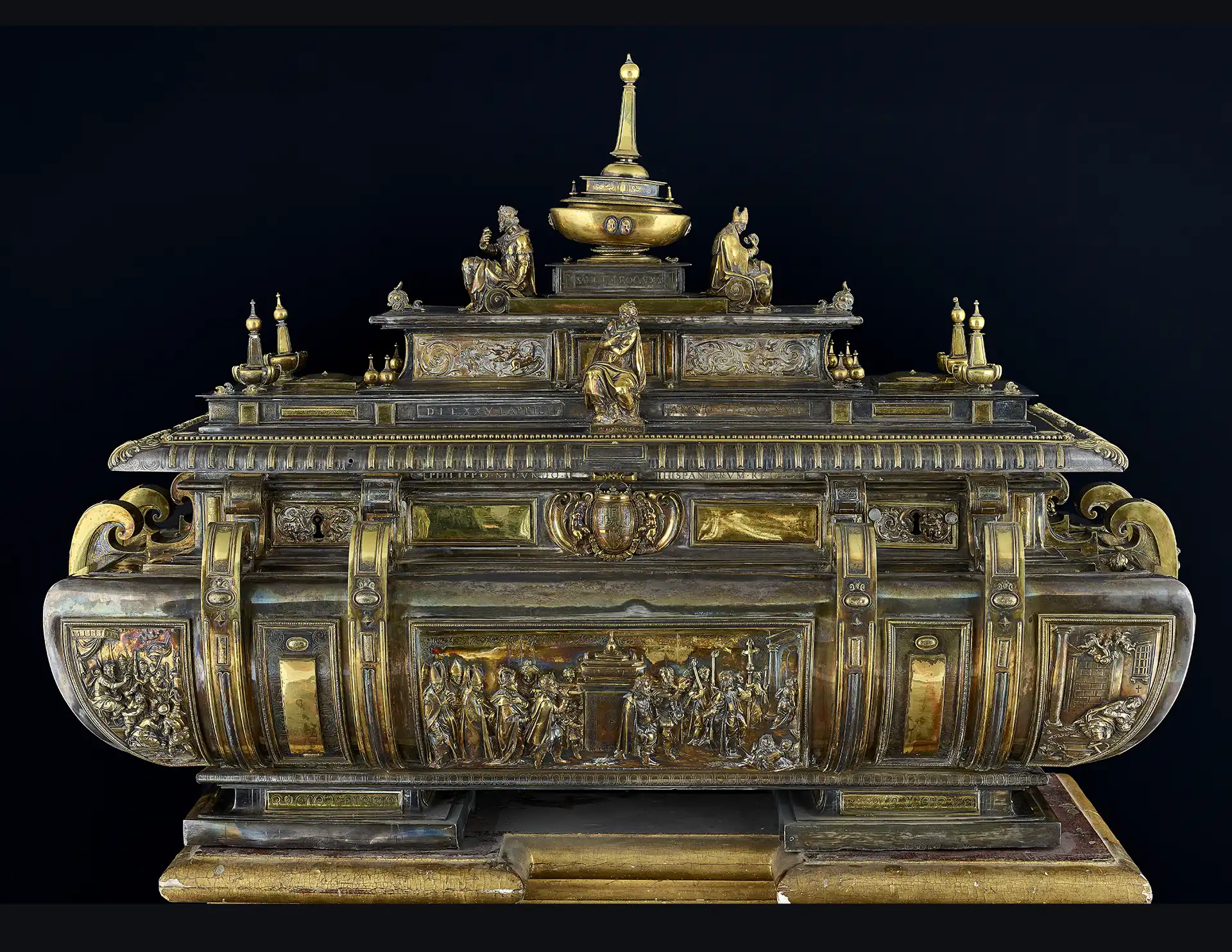
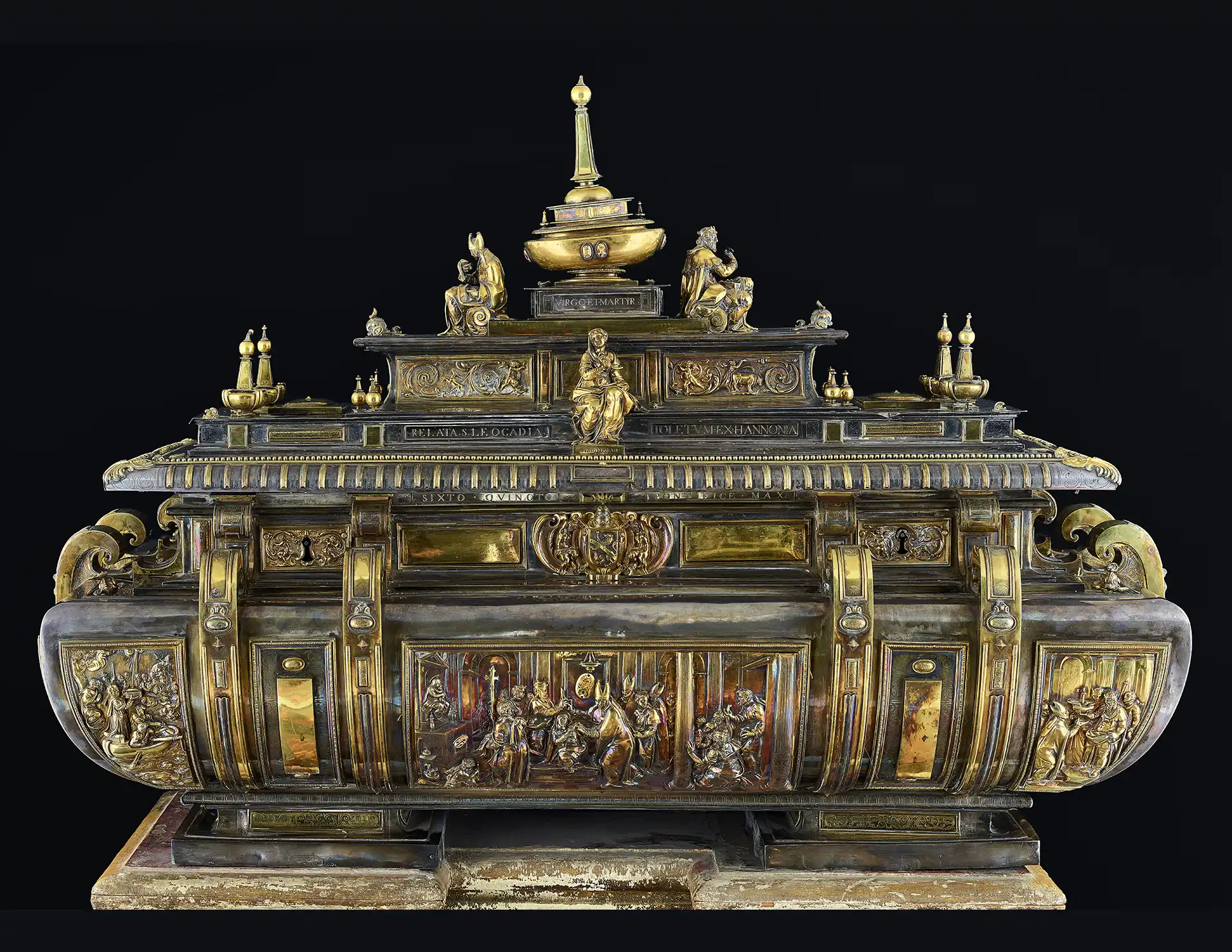
Its history begins in 1591, when Cardinal Gaspar de Quiroga promoted the creation of a great Sacrarium — a complex of rooms on the northern side of the Cathedral — intended to house the growing collection of relics gathered over the centuries. The arrival of the remains of Saint Eugenius and Saint Leocadia gave decisive impetus to the project. From this Sacrarium emerged not only the Ochavo itself, but also Toledo’s most beloved devotion: the Virgin of the Sagrario. Formerly, the image of the Virgin stood above the arch leading into this space, forever linking her name to the sacred place where the holy bodies were kept.
The earliest designs were drawn up by Nicolás de Vergara the Younger, master builder of the Cathedral. Construction extended over several decades, marked by interruptions, deaths and successive revisions. In 1604, under Cardinal Sandoval y Rojas, it was decided to allocate the north-eastern section of the Sacrarium to the future Ochavo. Juan Bautista Monegro and Toribio González took part in the works, until in 1628 Jorge Manuel Theotocópuli, son of El Greco, presented a new architectural design. Finally, in 1653, during the archiepiscopate of Cardinal Moscoso y Sandoval, the exterior structure was completed following the final plans of Lázaro Goiti, while still respecting elements of Vergara’s original proportions.
On 19 January 1673, the solemn translation of the relics to the new reliquary took place, filling the Cathedral with incense, candles and chant. From that moment on, the Ochavo became the principal reliquary of the Primate see: an octagonal sanctuary consecrated to the memory of saints and martyrs.
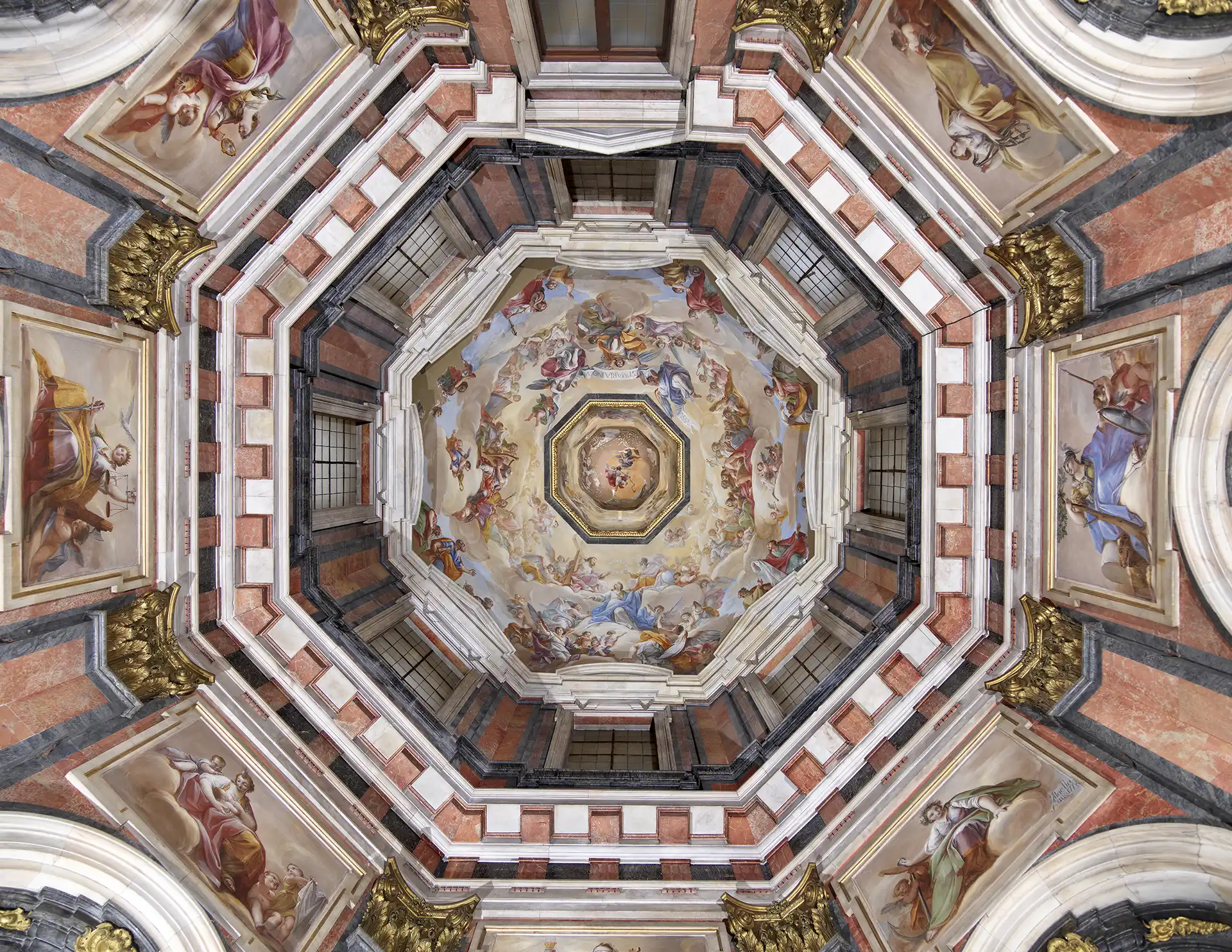
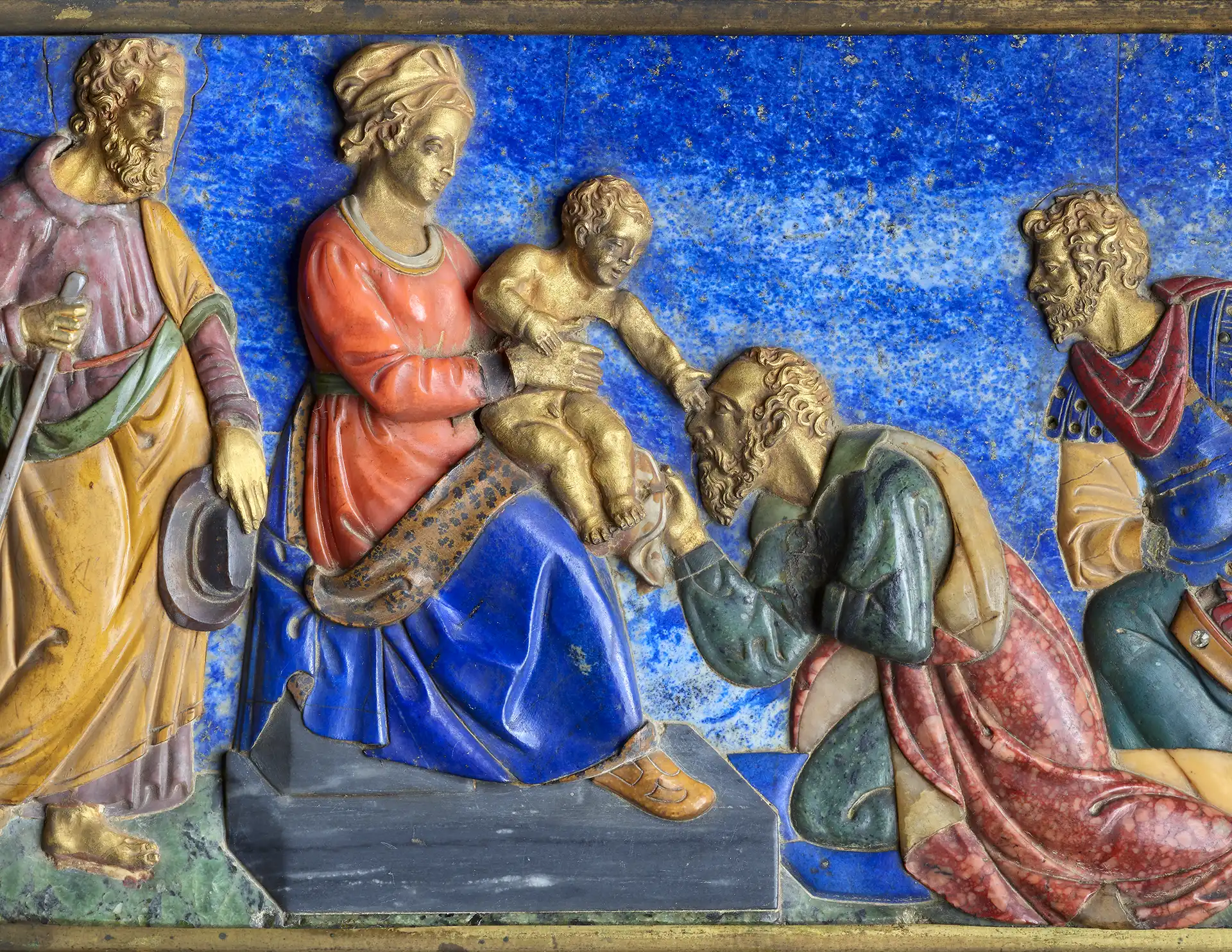
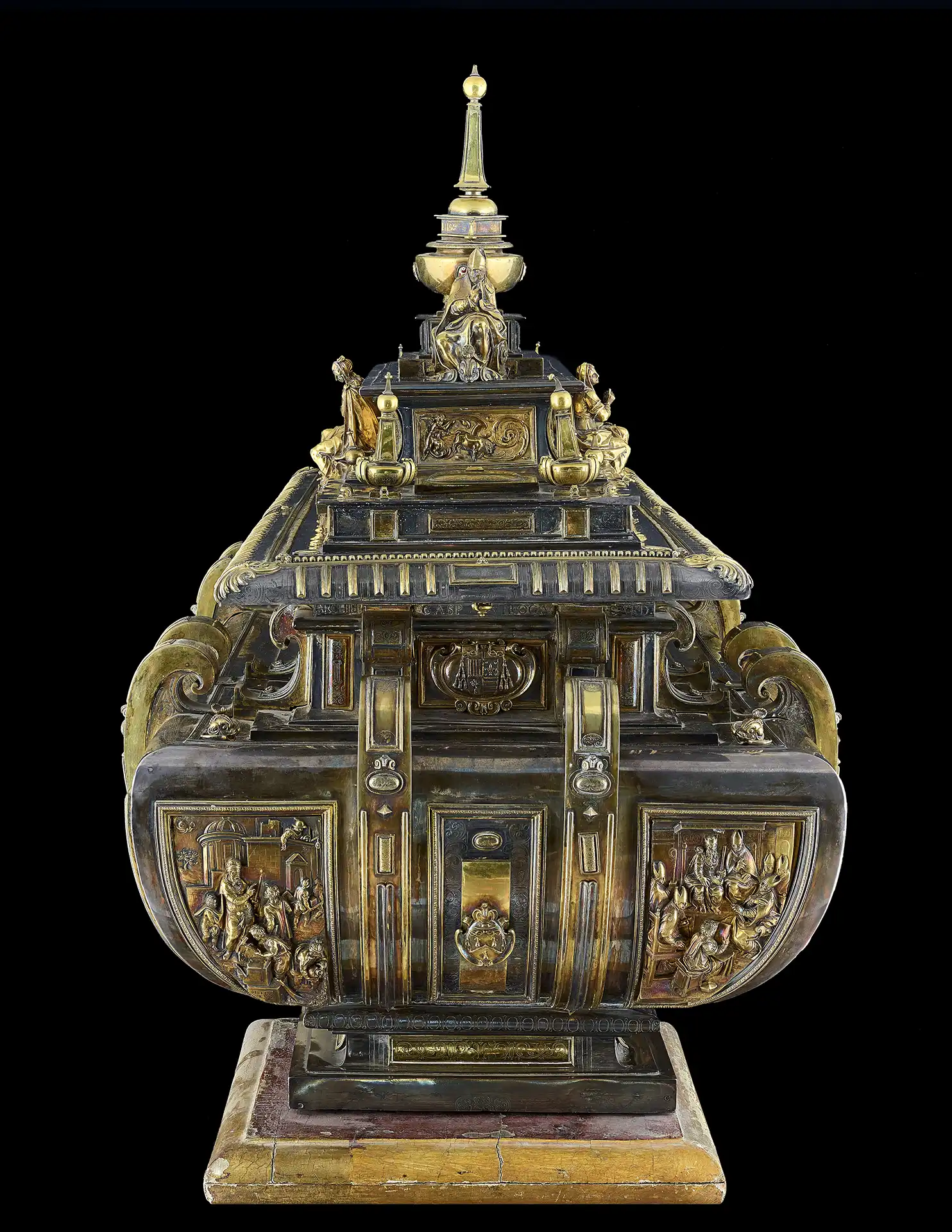
Its interior forms a symphony of coloured marbles, gilded bronzes and frescoes. Seven arcosolia — the number seven, symbol of Creation — house more than one hundred reliquaries displayed in glass and silver cases. The choice of an octagonal plan alludes to the “eighth day”: eternity, resurrection and new life. Thus the architecture itself becomes theology in stone — seven days of Creation, eight of eternity.
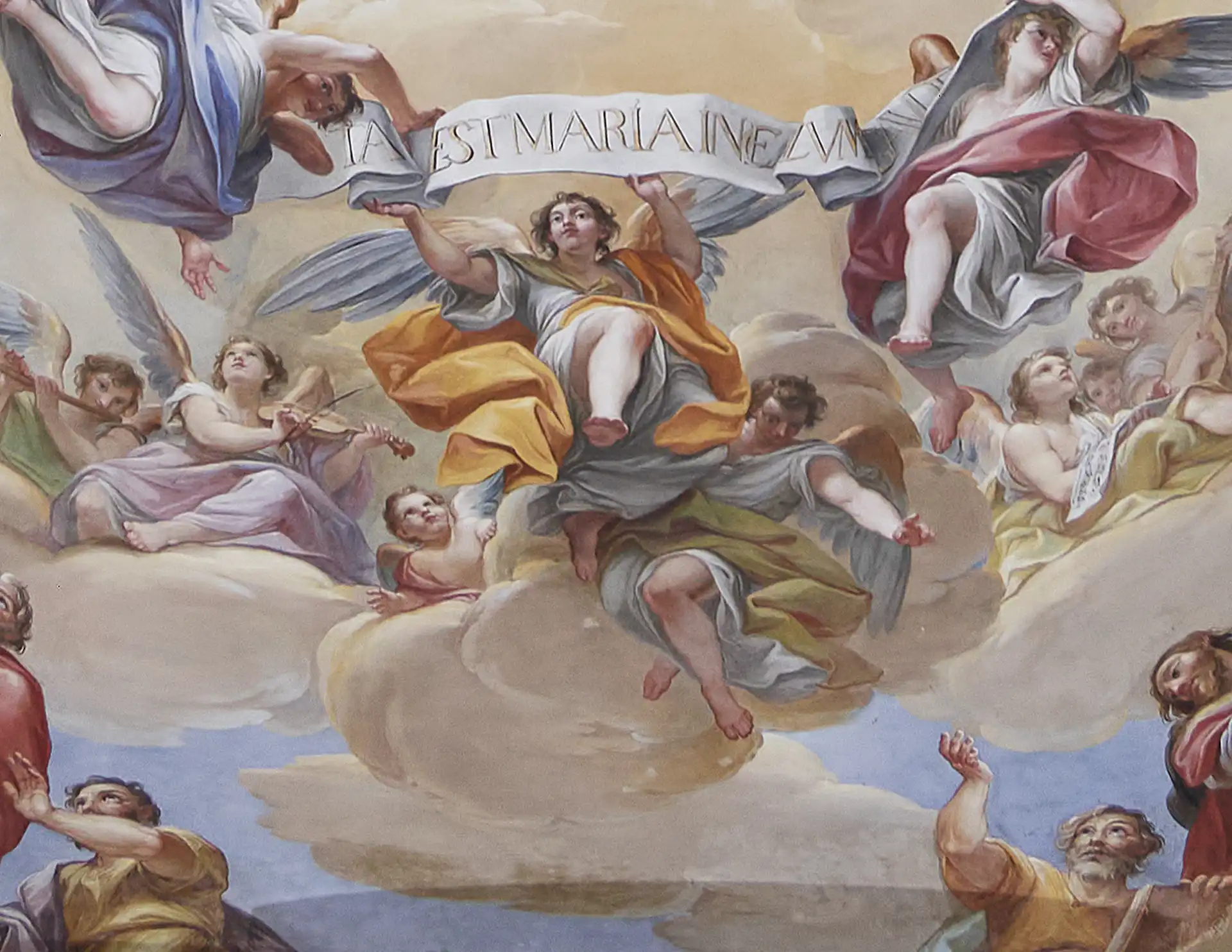
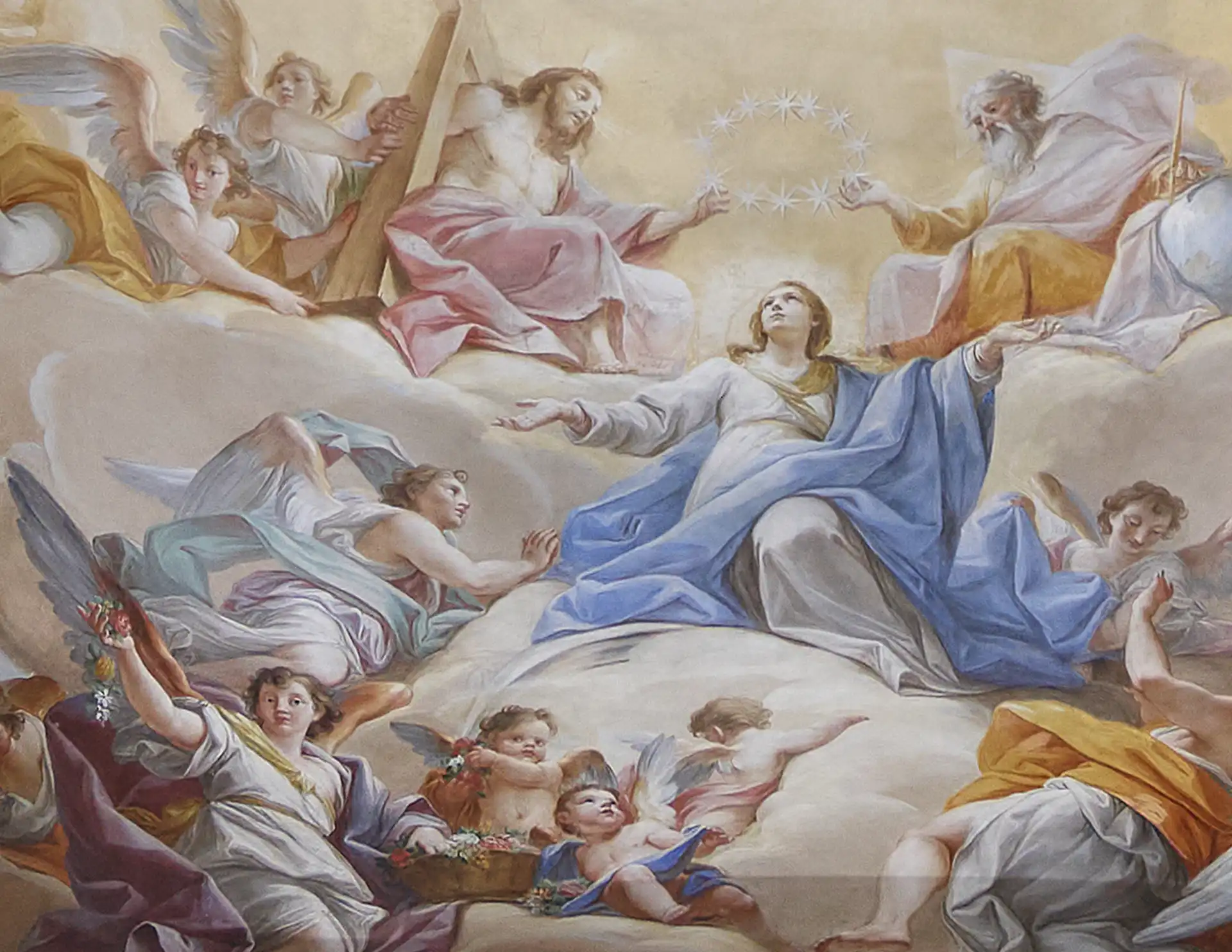
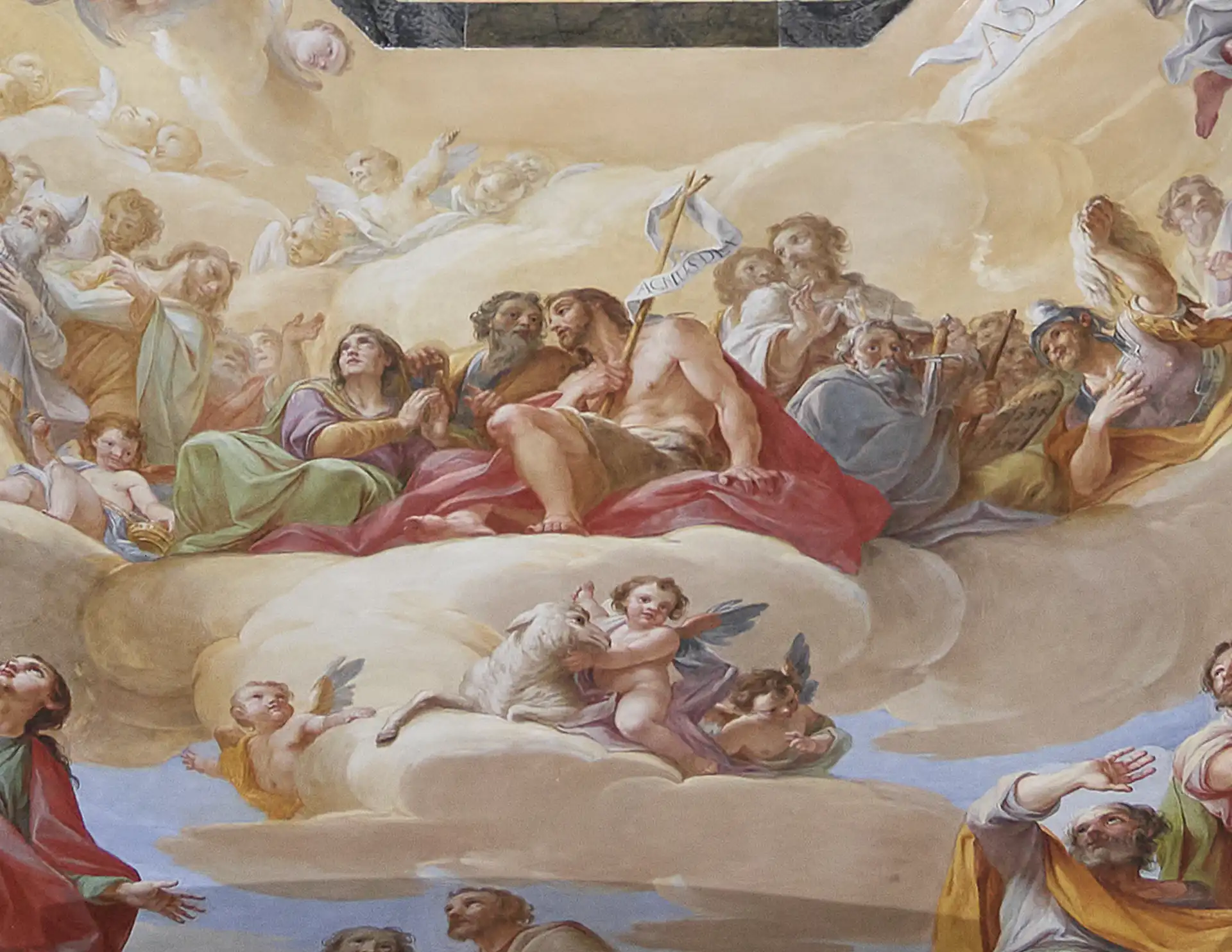
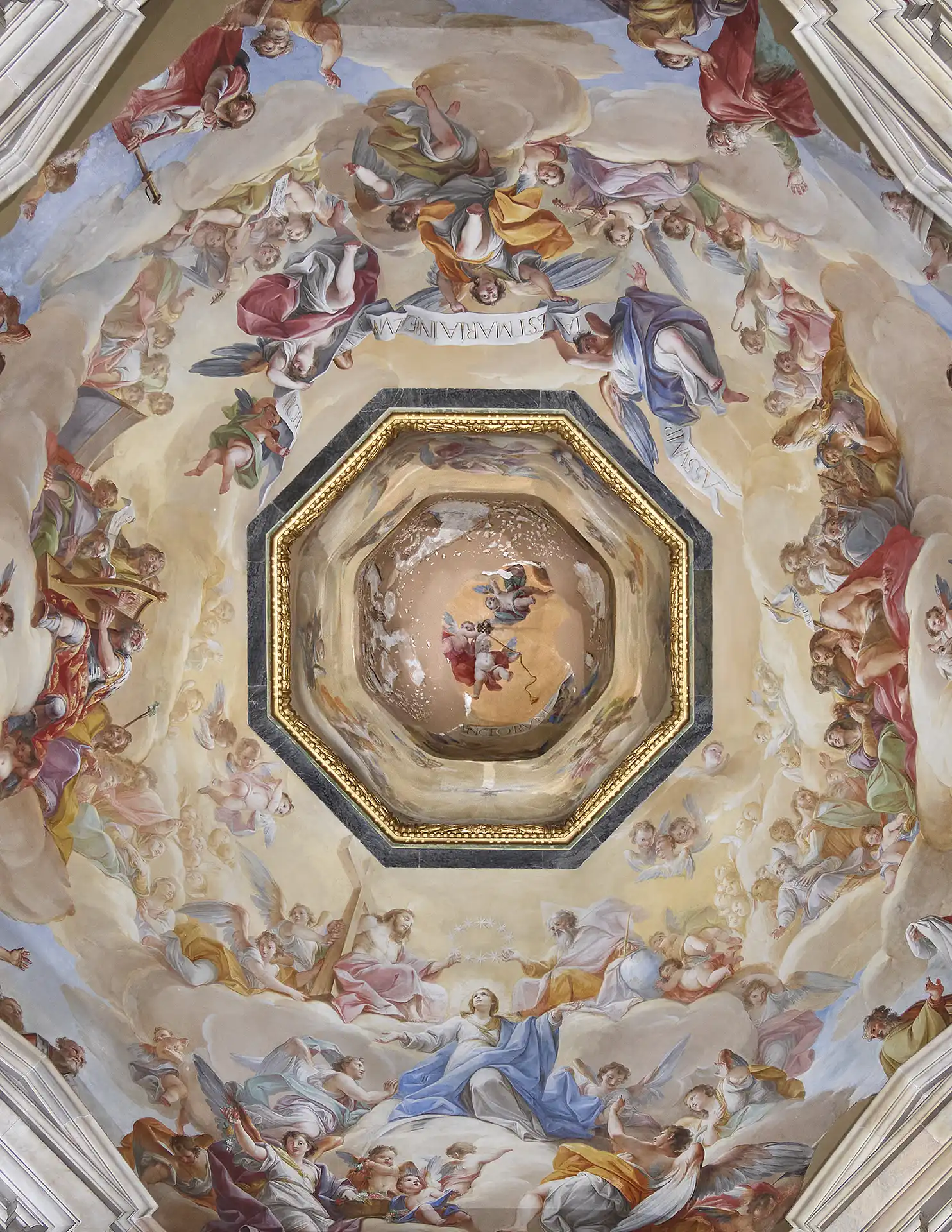
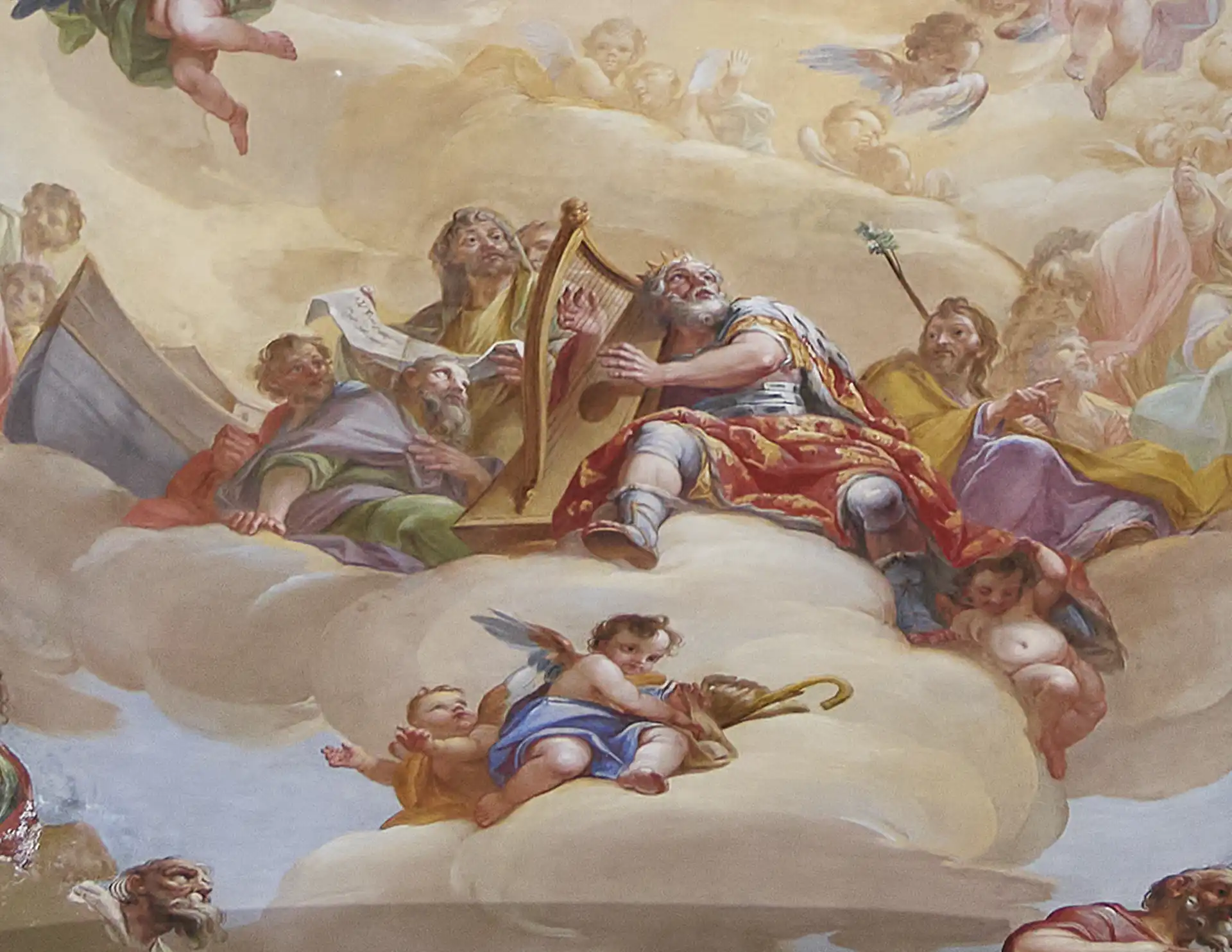
In 1778, the original paintings by Francisco Rizi and Juan Carreño de Miranda were replaced by frescoes by Mariano Salvador Maella, court painter to Charles III. Maella completely renewed the scenes of the middle register — the Cardinal and Theological Virtues — and partially restored those of the dome, designed by Jorge Manuel Theotocópuli, whose central motif depicts the Holy Trinity crowning the Virgin. Light descending from the upper lantern multiplies the reflections of metal and animates the colours of the marbles, creating an atmosphere suspended between earth and heaven.
The Ochavo is not merely a reliquary: it is a catechesis in architecture, a space that speaks through symbol. Its noble materials, proportions and history express the faith of an entire city. In this chamber — inaccessible to the public and wrapped in shadow — Toledo guards its most intimate secret: beauty placed at the service of eternity.