Life Among the Rooftops
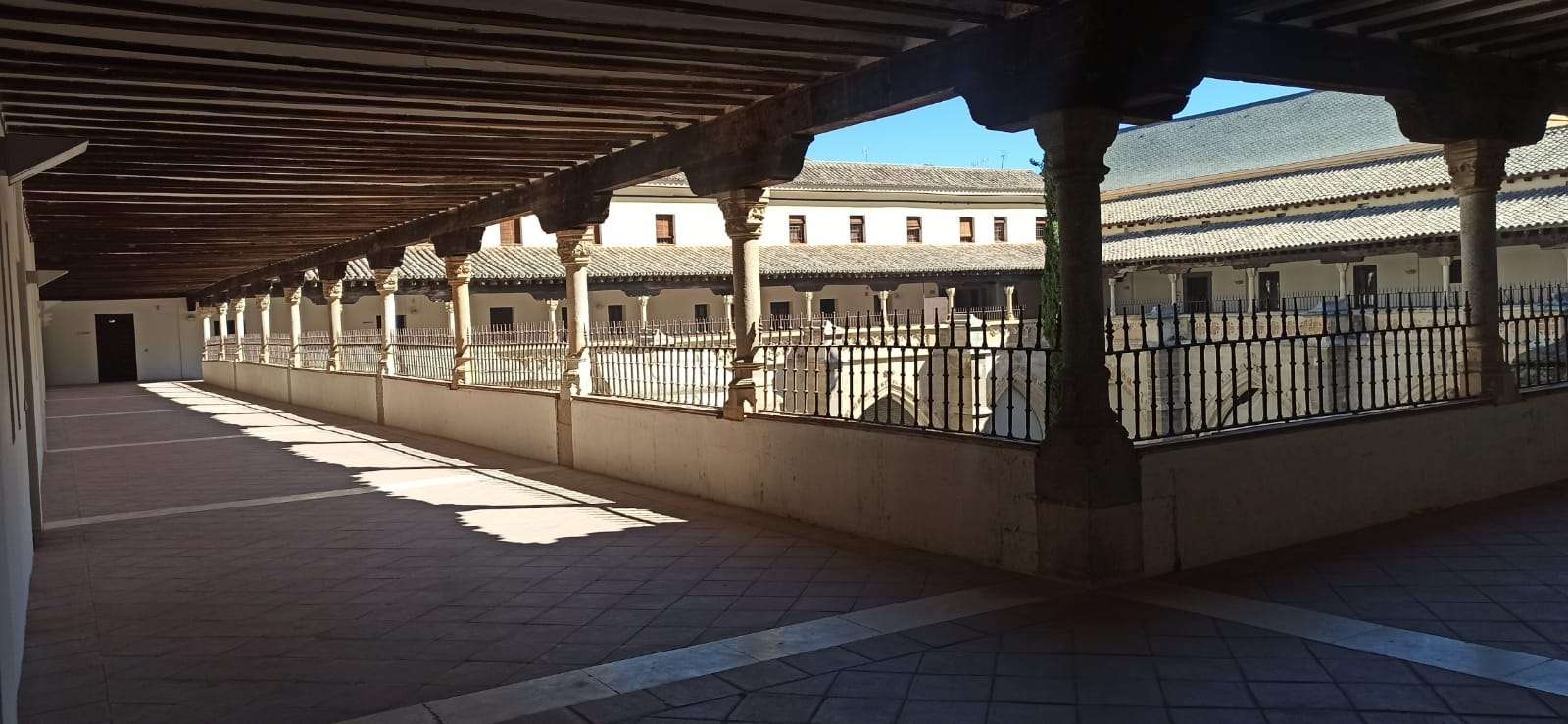
Rising above the great Gothic cloister, the Upper Cloister was conceived at the end of the 15th century as a service and residential area for those attached to the daily life of the Cathedral.
Within its quiet walls, known as the Claverías, unfolded the everyday routines of canons, sacristans and claveros — the officials responsible for safeguarding the keys, relics and treasures of the temple. Its architecture is sober and functional: a sequence of rooms with wooden beams and whitewashed walls, organised around galleries opening onto the inner courtyard.
From its balconies and corridors, one of the most unusual views of Toledo unfolds: the Cathedral’s rooftops, towers and medieval cityscape stretching towards the River Tagus.
For centuries, the Claverías were also places of work. Documents were copied here, liturgical garments stored, and the ceremonial of major feast days organised. Chapter inventories record kitchens, writing rooms and workshops, and many original doors, locks and floors still preserve the austere atmosphere of their origins.
In the 19th century, when Cathedral spaces were reorganised, many of these rooms were adapted as temporary dwellings for bell-ringers and servants. Following recent restoration, the complex has recovered its original character: a precinct suspended between stone and sky, where the echo of the Chapter’s domestic life still seems to linger.
To walk through the Upper Cloister is to glimpse the Cathedral’s other face — the one where grandeur coexisted with routine, and liturgy was prepared within humble walls.