The Ancient Flame of the Hispanic Rite
Established in 1504 by Cardinal Francisco Jiménez de Cisneros to ensure the perpetuation of the Hispanic–Mozarabic rite, this chapel — also known as the Chapel of Corpus Christi — preserves the most ancient liturgy of Spanish Christianity still in living use.
This rite, heir to Visigothic tradition and maintained for centuries by the Mozarabs (Christians living under Islamic rule), found its definitive sanctuary here after the Christian reconquest of Toledo in 1085, when the city became its last stronghold.
The chapel occupies the site of the former Chapter House, from which a star-studded ceiling has recently been rediscovered. Its initial design was by master builder Enrique Egas, and construction extended between 1502 and 1510.
After a fire destroyed the lantern in 1622, Jorge Manuel Theotocópuli, son of El Greco, rebuilt the dome, completing the ensemble in 1631. The entrance grille, forged by Juan Francés in 1524, bears the coats of arms of Cardinal Cisneros and the canon Diego López de Ayala. Beyond it stands a Gothic trompe-l’œil painted by Juan de Borgoña (1514), simulating an architectural portal crowned by a Pietà attributed to Enrique Egas.
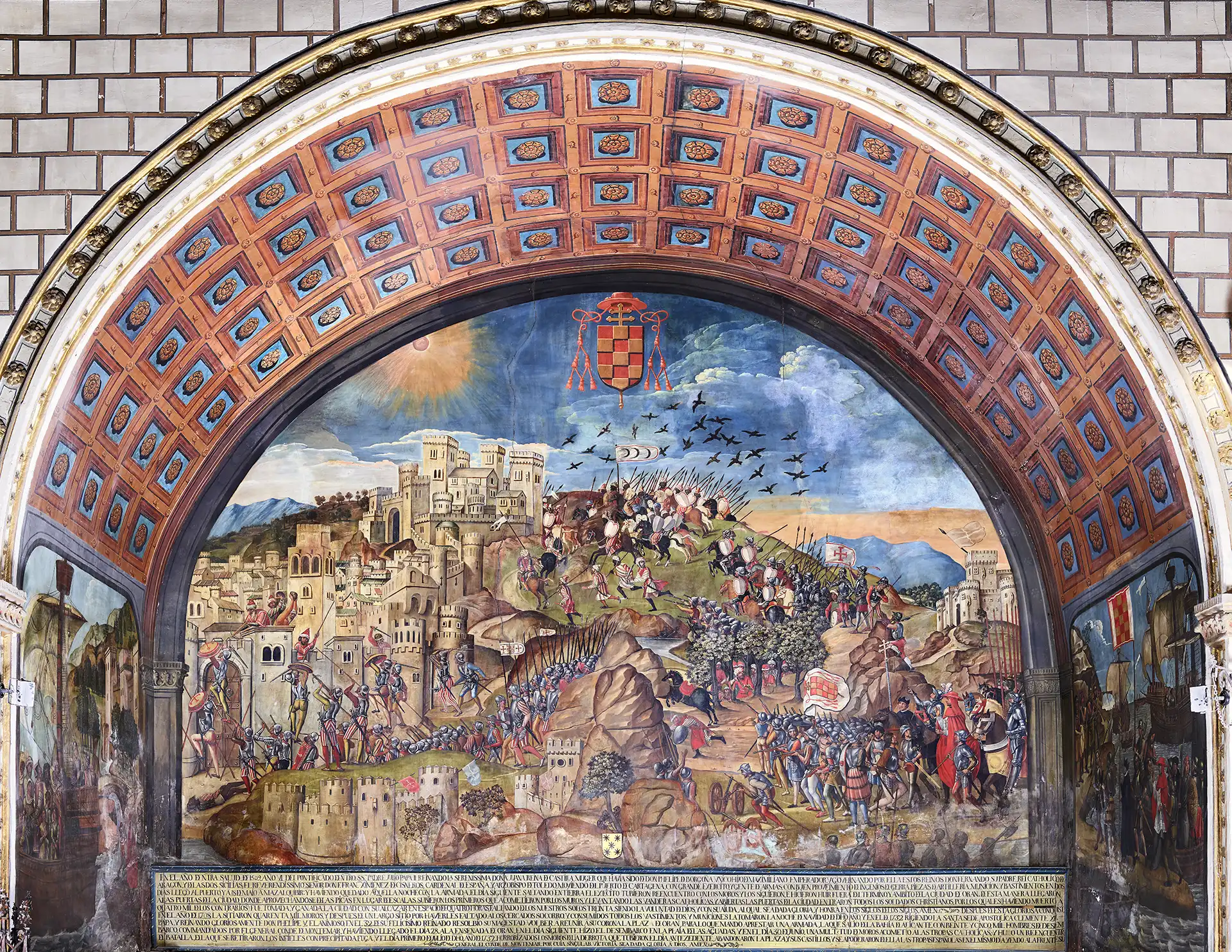
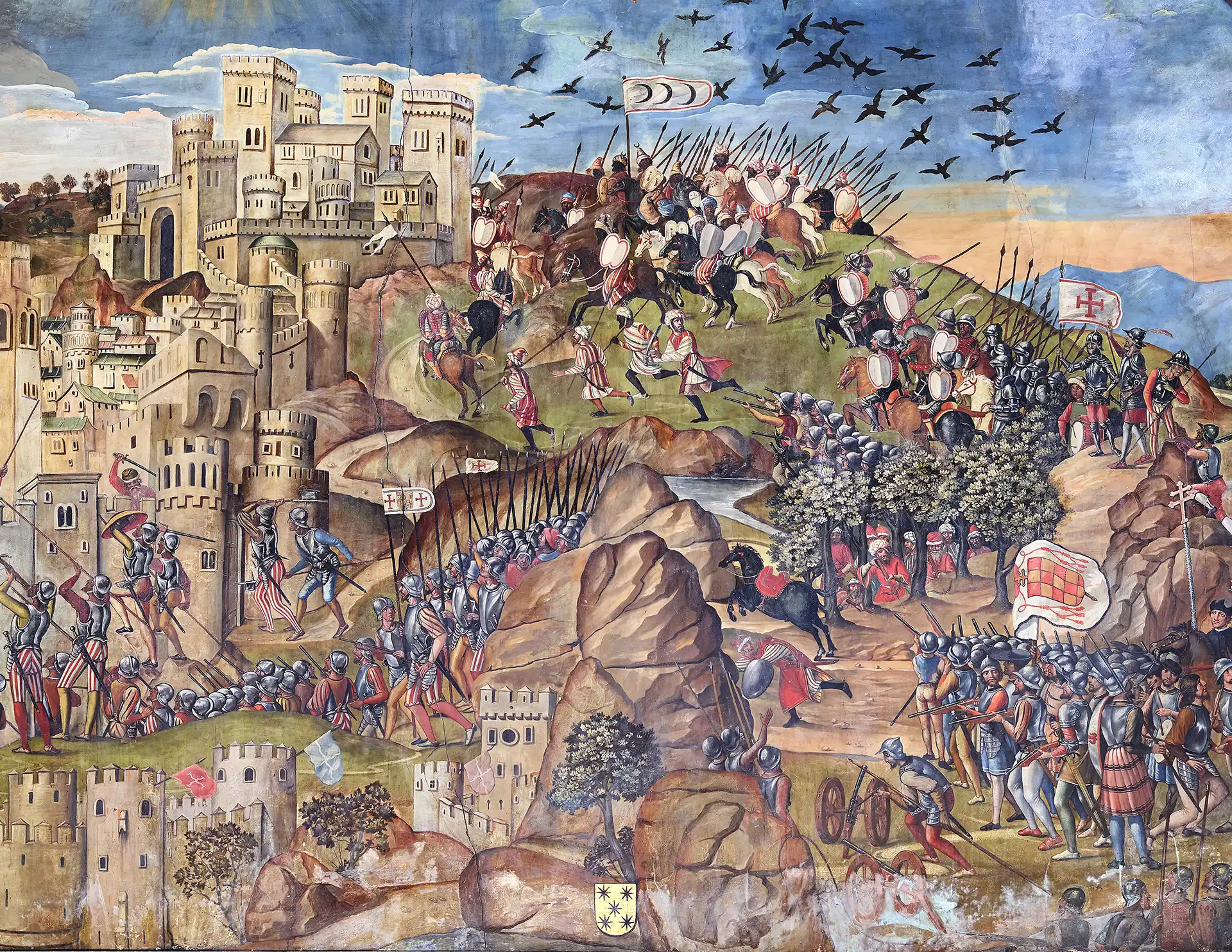
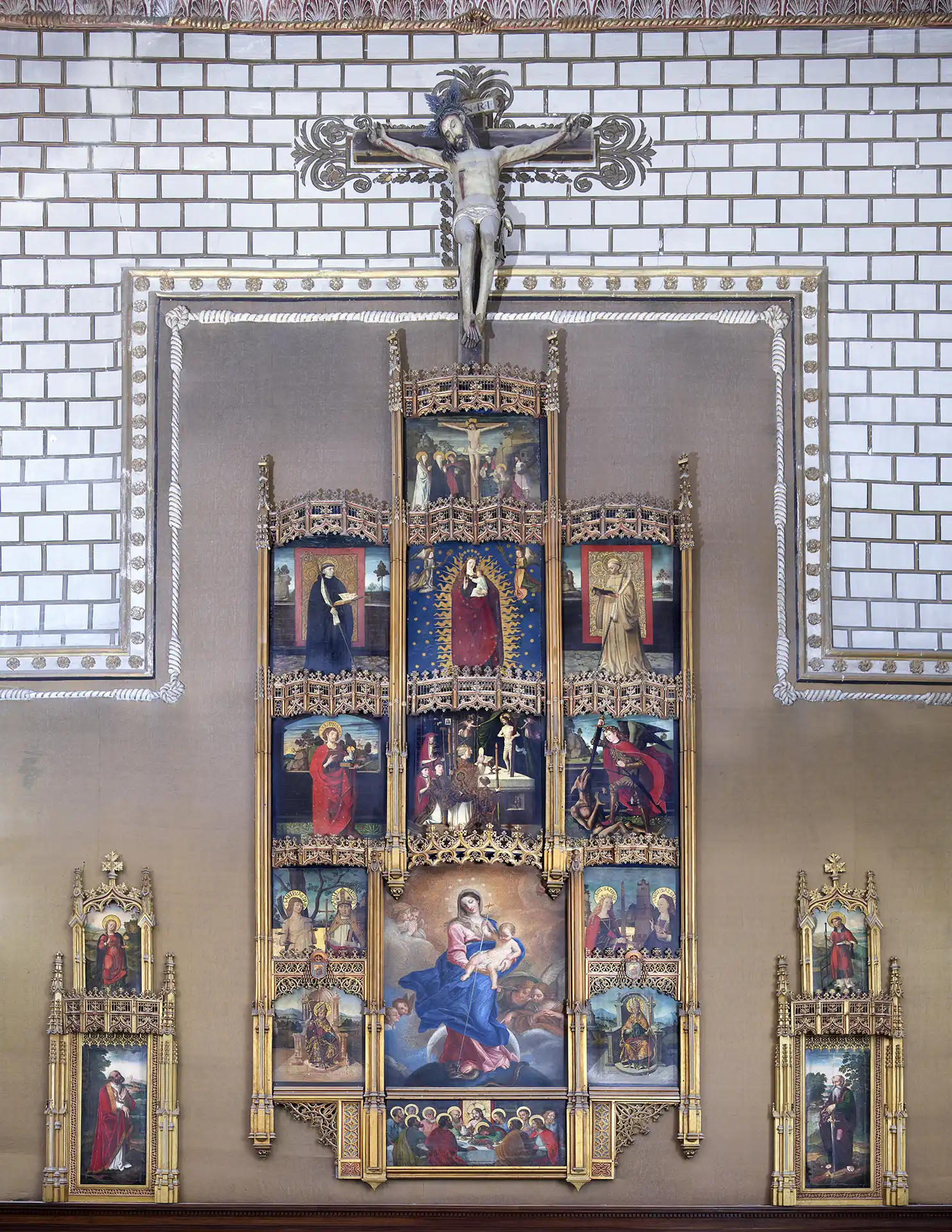
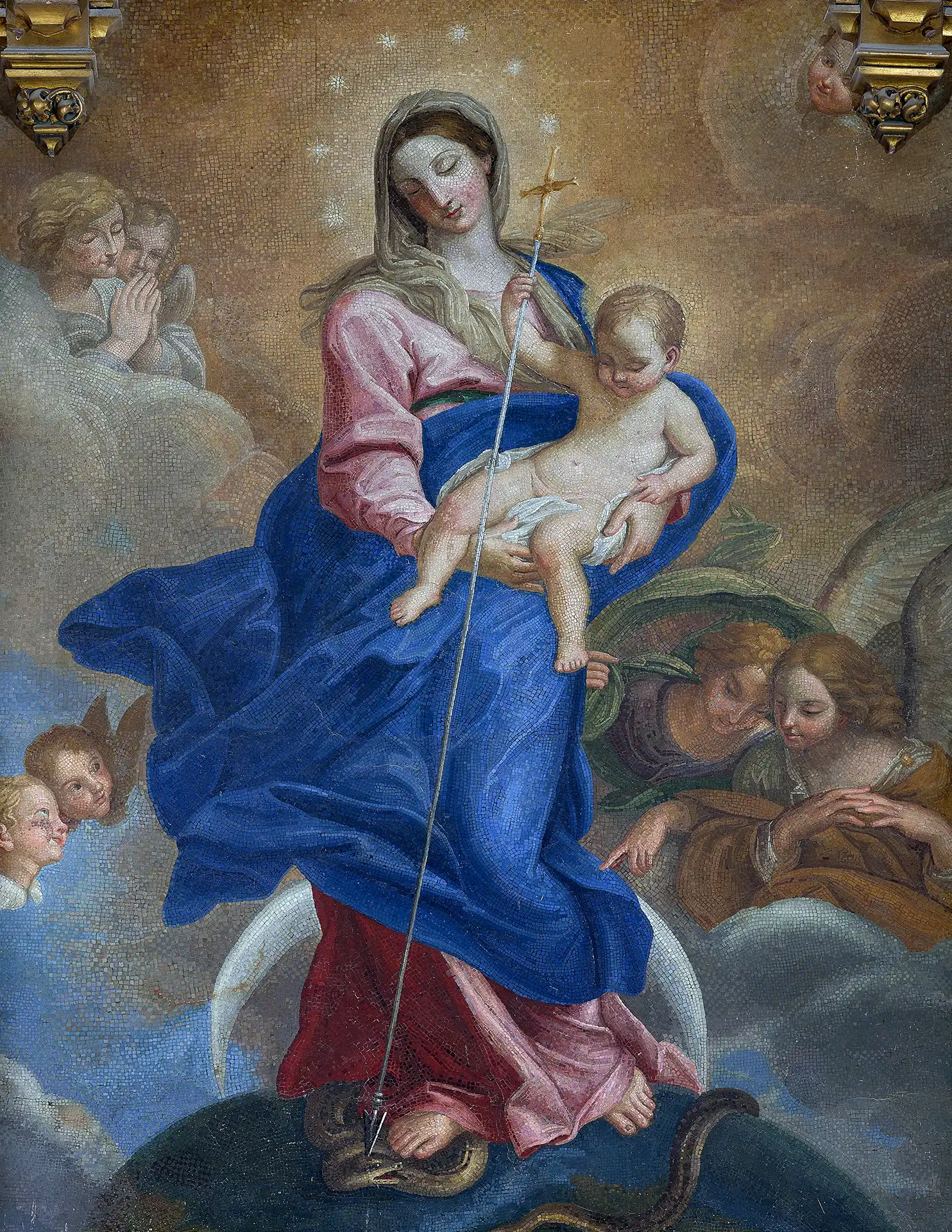
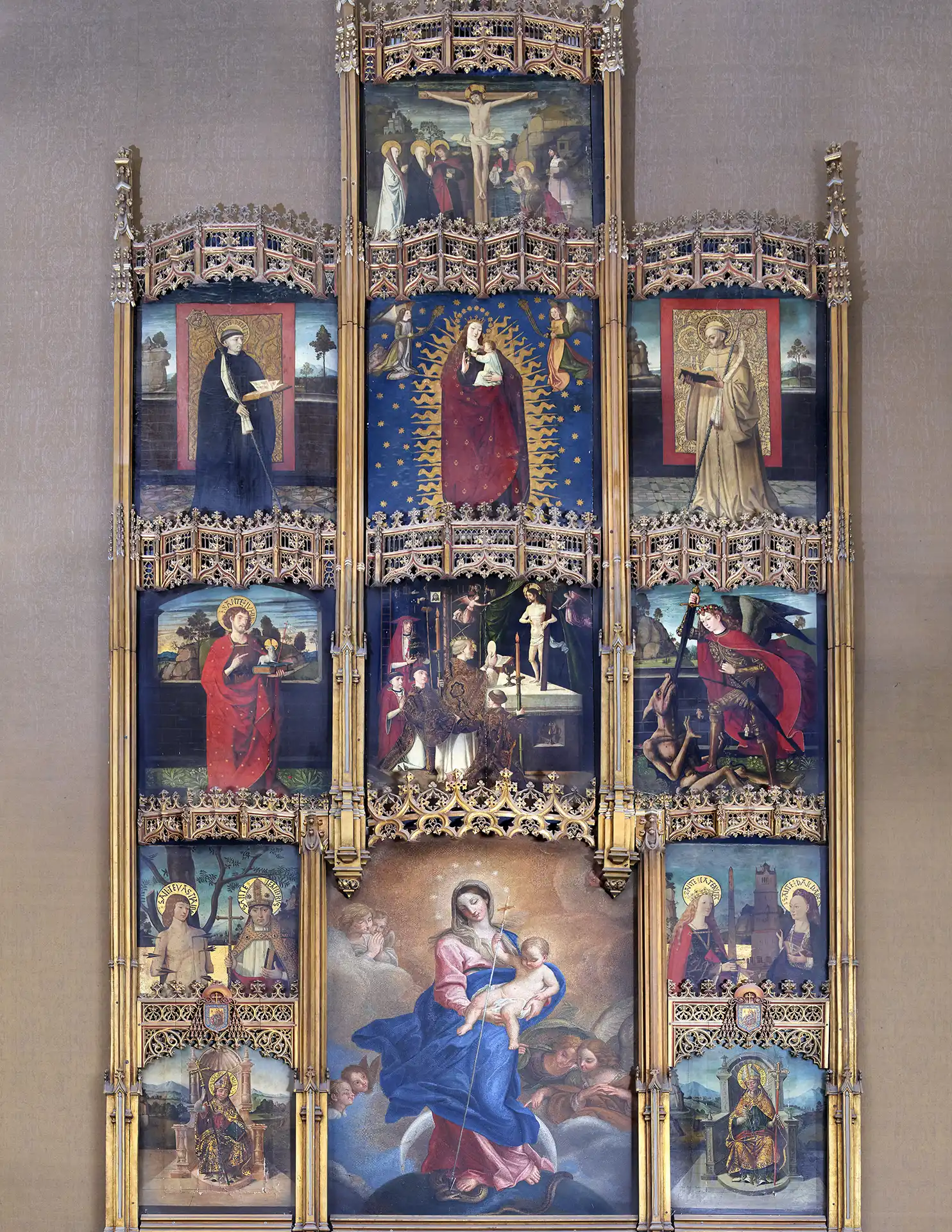
The interior preserves an extraordinary pictorial programme commemorating the Siege and Conquest of Oran (1509), a military and spiritual enterprise led by Cisneros himself. Painted by Juan de Borgoña, the scenes combine narrative realism with serene devotion. The altar is presided over by an altarpiece remodelled in 1791, composed of panels depicting saints and crowned by an Ibero-American crucifix (1590). At its centre is one of the Cathedral’s most singular treasures: a mosaic of the Immaculate Conception, commissioned by Cardinal Lorenzana in Rome and brought to Toledo in 1796 after an eventful journey that included a shipwreck. Created with hard-stone tesserae after a design by Carlo Maratti, the mosaic depicts Mary standing upon the moon, holding the Child, who wields the dart with which he strikes the dragon — a powerful, luminous image of the triumph of good over evil.
Each morning, the Mass of the Hispanic–Mozarabic rite continues to be celebrated here, as restored and printed by Cisneros in 1500.
The Mozarabic Chapel remains a bridge across centuries: the living echo of an ancient prayer that Toledo guards as its purest flame.