Pantheon of the Trastámara Dynasty
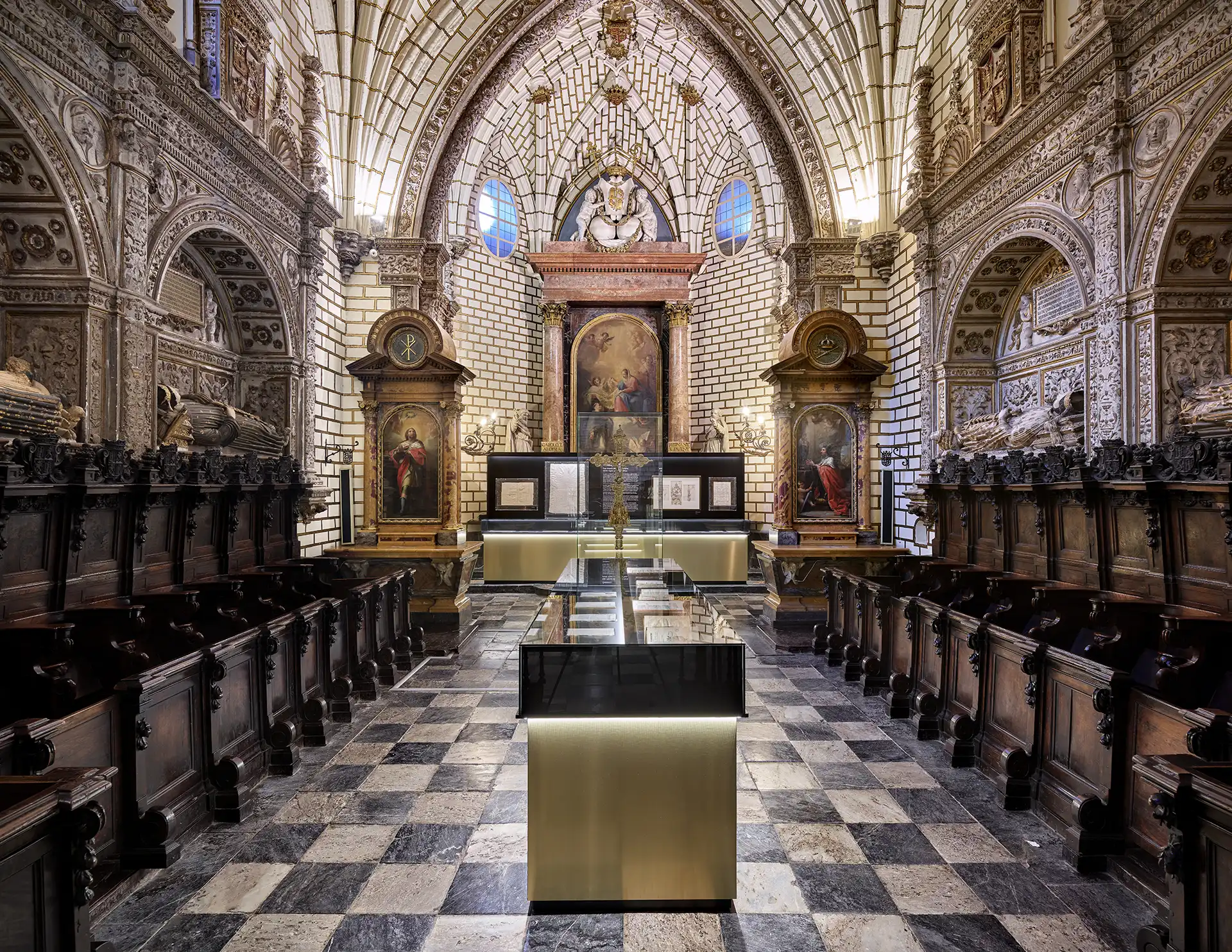
The Chapel of the New Kings brings together, within a single space, the memory of three historic royal chapels: that of the Old Kings (founded by Sancho IV in 1295 at the rear of the presbytery), that of Queen Catherine of Lancaster (erected in 1415), and that of the New Kings (founded by Henry II in 1374, originally located at the west end near the tower). Their gradual unification — formally completed in the 19th century — explains the exceptional historical and documentary density of the ensemble.
With the closing of the vaults in 1493 and the evolving liturgical and processional needs of the Cathedral, the Chapter and the archbishops promoted the relocation and reconstruction of the royal chapel in the ambulatory, obtaining the authorisation of Charles V. The project was refined by Enrique Egas and Diego de Siloé, while Alonso de Covarrubias assumed direction of the works and decoration from 1530 onwards, erecting the definitive chapel between 1531 and 1534 over earlier spaces dedicated to Saints Cosmas and Damian, Saint Barbara and the Cathedral forge.
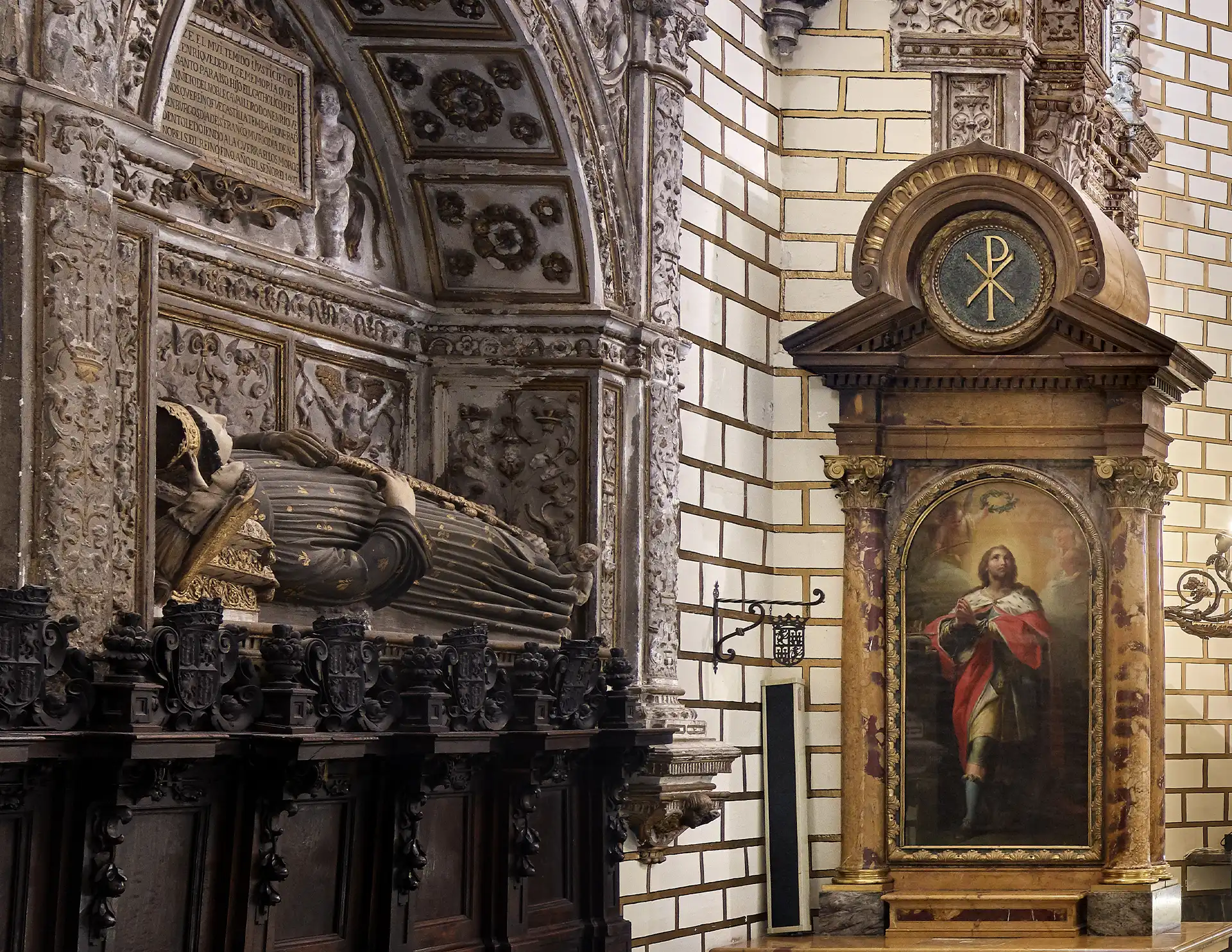
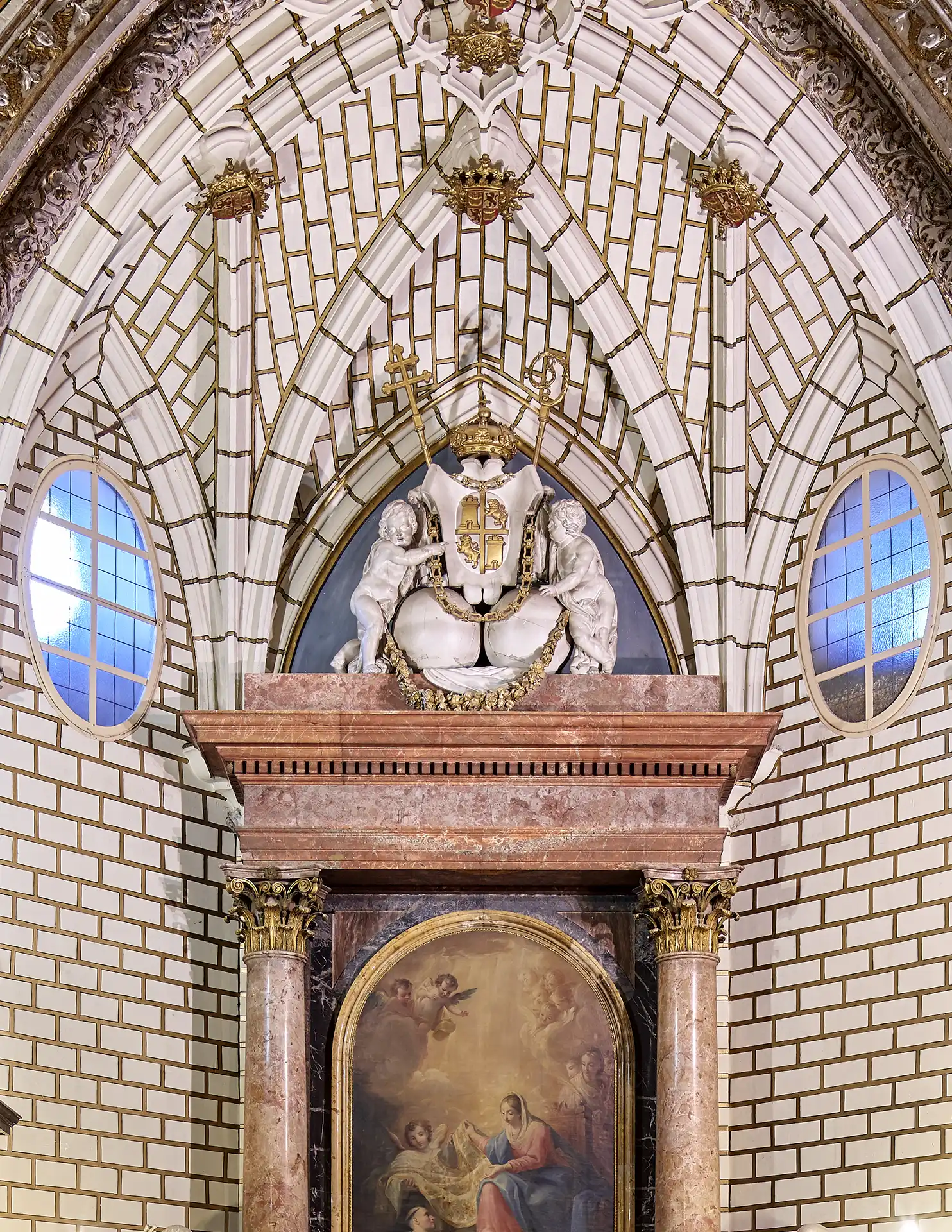
The Plateresque entrance — with columns covered in grotesques and polychromed reliefs — leads into a vestibule and then into the main body of the chapel, enclosed by grilles by Domingo de Céspedes (1532). Above rises a gallery and organ by Miguel Puche. In the 18th century, Ventura Rodríguez designed Neoclassical marble and bronze altarpieces (1777), adorned with paintings by Mariano Salvador Maella. The main altarpiece (1805), financed by Charles IV, features Maella’s large canvas of the Imposition of the Chasuble upon Saint Ildefonso and sculptures by Alfonso Bergaz. The present stalls for the chaplains were carved in walnut by Lupercio de Falses.
The royal tombs structure the dynastic narrative. Along the lateral walls rest Henry II with Juana Manuel, and Henry III with Catherine of Lancaster — 15th-century works by Luis González and Pedro Rodríguez. In the polygonal presbytery stand the kneeling effigies of John I and Eleanor of Aragon (1534), sculpted by Jorge Contreras. A further orant figure commemorates John II. The chapel of Queen Catherine once possessed its own Chapter, and in 1530 one of the earliest Statutes of Purity of Blood was established here, attesting to its singular courtly and liturgical status.
Today, the chapel stands as a pantheon of Castilian monarchy and a compendium of Toledan art from Late Gothic to Neoclassicism — a space where the history of power seeks, in the beauty of stone, its perpetual prayer.